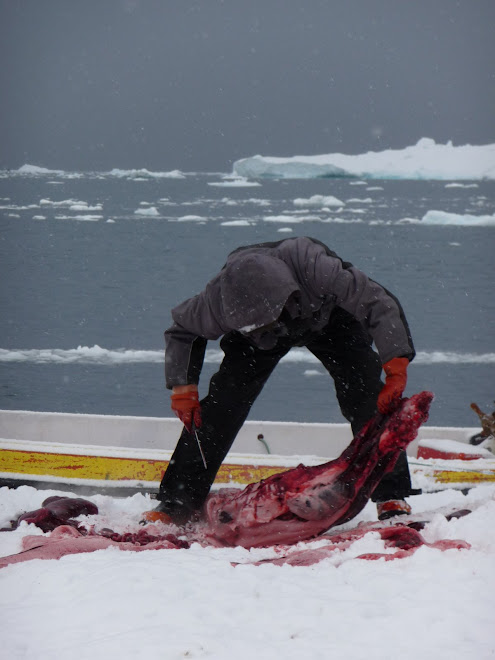
A few weeks before my return to the US, I paused the post-dinner clean-up and turned to Amina as she entered the closet of a kitchen in which we prepared the family’s meals (ok, fine. She did most of the preparing. I followed orders).
“Amina?” I asked, drawing her attention up from the soup of trash and rainwater that she had squeegeed in from the living room. “I have to do this presentation when I go home. And I don’t know how to talk about everything in just 10 minutes.”
I had been distracted by the dilemma for days and, since Amina was responsible for solving the problems that entered this house, I decided to offer her this one. She straightened her back, popped her hip out and rested her right hand on the generously-padded, protruding bone. Clearly she was preparing to lend her authoritative, problem-solving expertise.
“Here’s what you need to do,” she told me … authoritatively. “You need to figure out the thing that is the same in each place that you visited, and then talk about that one thing.”
Only half-listening to the elaborations that followed, I giggled to myself at the thought that there could be a single and tellable thing, besides the basics of existence, that was the same in Greenland, South Africa, the UK and Morocco.
Silence. “OK?” she asked, meaning “Did you understand everything and now you’ll do what I told you?”
“Yes, thank you, Amina,” I smiled, and turned back to the dishes, to think (because it’s much easier to think when your hands are wrinkly and dunking in tomato-y water). And then I realized: everywhere that I went, I learned to do the dishes.
I scoffed just a little at Silver when he called me to the sink on one of my first evenings in Greenland, telling me he wanted to teach me how to do the dishes. I was offended at his assumption that I, the American girl who had come to the Arctic with no home, no friends, and no realistic plans, would not know how to wash a glass. An absurd assumption, clearly. The technique was relatively complex, involving two sinks and an intricate balancing/piling/stacking of drying plates on the far counter. As it turned out, I actually didn't know how to do the dishes ... in Greenland.
Of course, I imported the Greenland technique to the UK, where a mechanical dishwasher rendered it useless and I was forced to relearn a new method ... whose tendency to delay washing the dishes between meals (in order to fill the washer) was absurdly inappropriate in a South African house full of young, single, alternately too-busy and too-lazy-to-do-the-dishes renters. And what was considered a "clean" dish by my South African housemates was abominable to my Moroccan family ... So I learned how to do the dishes four times. And by the end, learned not to scoff, because assuming that I already knew the technique - the only technique, the best technique - was more absurd than not knowing one at all.
Now one would think that at this point, I would have internalized the developing moral of this story (which is, in case you didn't see it coming that I am not omniscient). But alas, while fumbling with my iPod and thinking that in addition to outlawing text-messaging while driving, the state of Massachusetts should probably make mobile iPod searches illegal, I laughed when
Krista Tippett informed me that I had chosen to listen to an hour-long "Speaking of Faith" podcast about a Jewish theologian from the 1950’s (http://speakingoffaith.publicradio.org/programs/heschel/). Of course I assumed that a dead, Jewish theologian would not adequately distract me from the other angry, Boston drivers on the road. And of course, I was wrong. Because good theologians have something interesting and relevant to say to everyone…
Abraham Joshua Heschel lived, taught, led and thought in America in the mid-20th century, alongside good friends and fellow activists like Martin Luther King, Jr. A rabbi, a mystic, and a professor of Judaic thought, Heschel was also deply involved in ideas and actions of interreligious communication. In a 1965 speech entitled “No Religion is an Island”, Heschel theorized:
“I suggest that the most significant basis for meeting men of different religious traditions is the level of fear and trembling, of humility, of contrition, where our individual moments of faith are mere waves in the endless ocean of mankind’s reaching out for God. Where all formulations and articulations appear as understatements. Where our souls are swept away by the awareness of the urgency of answering God’s commandment, while stripped of pretention and conceit, we sense the tragic insufficiency of human faith.” (Heschel, 1965)
The point, it seems, is that none of us is right. None of us knows the right way - the only way - to do the dishes and none of us knows the right, only way to enlightenment, to God. But we are all aiming for the same end – ultimate, perfect understanding and clean dishes (though my mom may dispute that because sometimes it seems that she’s actually going for VERY clean dishes). It's an obvious, simple, humbling and terrifying realization, because it necessitates a fall from the security of surity and knowing. It means constantly admitting that you don't know and then humbly submitting to the learning. Because if no single one of us knows what is ultimately right, each of us probably understands a piece of it. And only by genuinely engaging with one another, by humbling and graciously submitting to this learning, can we collect those pieces and get a little closer to a less-imperfect understanding.
I didn’t leave the United States a year ago to learn domesticity (though my mom was, admittedly, very excited to hear that it was a side effect). I intended, with a project on religion and environmentalism, to explore ideas of faith, nature and community. And not until the end, until that evening at the sink, did I realize that the dishes were teaching me the essential quality of these ideas. Because standing at a sink, scraping at the slobbered-on morsels that your dinner-mates left behind, and occasionally sloshing the dirty dishwater onto your jeans, is a very humbling experience. And to arrive in a new place, and be told that you don’t know how to do something so simple and essential as the dishes, something which you were always sure that you knew, is doubly humbling. And (here comes the connection that took 500 words of build-up!) what is an experience of nature without that awesome realization that there is something bigger than you, something that goes completely beyond the limits of human understanding. And what is religion besides trusting and humbling yourself to your faith and/or God. And is there community without sacrificing one’s individual needs and desires for the sake of the whole?
Would you believe that in the end, it turns out that Amina was right? That there is one thing that is the same in all these places and all these ideas? Would you believe that in the end, it turns out that I was studying humility? And that I learned it at the kitchen sink ...
Friday, October 16, 2009

Thursday, June 11, 2009
You Can Call Me Betty ...
When I was a child, it was the watchful and omniscient eyes of God and Santa Claus that kept me on my best behavior. Now, living in my own apartment for the first time in my life, I have my neighbors who know when I am sleeping, who know when I’m awake, who know (it seems) when I’ve been bad or good … but there are no extra presents under the tree if I’m good – for goodness sake! There is, however, less yelling in the staircase and less worry that I’ll get kicked out before my rent is up or beaten by a Moroccan woman twice my size, with a family, a reputation and a “nice, quiet neighborhood” (as the savvy salesman of a landlord put it) to protect.
Due to this rather delicate living situation that I have advance-rented my way into, I have turned into something between a conscientious but sneaky 15-year-old and a scandalous but ashamed housewife from 1950’s suburban America. If I come in late, I lift the door a little when I close it, to ease pressure on its squeaky hinges and increase my chances of “not waking Mom and Dad”. If friends stay over late, I whisper “Skoooot!” (shut up) when they laugh too loudly at the paranoia that you are supposed to entertain as 16-year-old, drinking in the basement while your parents slept upstairs, and not as a 24-year-old, quietly reading in the apartment on which you are paying rent.
I bet that when you were 16, you didn’t do housework – especially not at 8 AM, when the neighbors would be sure to hear the clinking of dishes in the sink or the squeak of a squeegee (I can’t believe spell-check just approved that word) on the bathroom floor – just to prove that I am a good, upstanding woman. Sometimes I even squeegee out of contempt, because I know they’re still sleeping – and if they awake to the creak of the front door at midnight, certainly vigorous squeegeeing should have a similar effect (f.y.i. spell-check doesn’t approve of ‘squeegee’ as a verb). But I’m not that vengeful, really, so mostly I play “Betty”, the tactful 1950’s housewife. I close the windows when Si Mohammed or Mohsin wants to smoke, so as to prevent any smoke from wafting into upstairs apartments and the astute noses of nosey neighbors. And the bottle of wine that I’ve been “saving for the right occasion”? Hidden among the recyclables next to the trashcan, just in case a neighbor knocks and I have to invite them in. And last week, after hanging most of my clothes to dry in the sun on the roof, I hung a laundry line in the living room. For black underwear.
But I’m not living in Pleasantville. I am in Fes, a 1,200-year-old, Muslim city, in the 21st century. And to be honest, I don’t really blame my neighbors for being upset (though I don’t pity them enough to come home every evening at 9). Here they are, single women with children, getting up at 7:30 (yes I know when they get up because remember how 3-years-olds actually start running and screaming as soon as their eyes open?) to take kids to school and go to work themselves. And they have to deal with a first floor apartment that hosts a nearly constant flow of foreigners – I’m here until July, someone else will move in for the summer, people will rent by the week or even by the night at peak tourist season in August … My landlord gets all the profit, while these women get insomnia (allegedly) and suspicion about the questionable activities of their cute little American neighbor.
This is a Muslim country and alcohol is Haram, forbidden in Islam. Smoking is certainly not acceptable, nor are most things that one could be doing outside of her house after 9 PM. But I am not hanging out with sketchy people on the street, doing drugs or selling my body. I am usually eating dinner with friends. But how would they know that unless they got really crazy and started following me around, which I would really prefer not to happen. So you can’t blame them. But this is Arabia, baby – so you also can’t let them win …
“You know,” Si Mohammed leans over his coffee to tell me, “If I were you, I would go to the police. I would go and say, ‘You know, I am an American and I am renting this place and these people they are harassing me and blah blah blah.’” He looks at me, sipping my cup of more-milk-than-coffee with more-sugar-than-milk. He laughs, ruffles my hair like I’m his kid sister, “But you won’t do that.”
Instead, I strategically avoid all contact with the residents of the two other apartments with whom I share a front door. I listen to the stairwell before leaving the house and then scurry between out my door when the hall is quiet. I told Aziz the story, and he asked an old friend, who lives next door, to look out for me and talk to the neighbors. The friend said that house is full of jealous women and he tries to avoid them too. So I remind myself, between spats of paranoia, of the Arabic saying that Mohsin repeats to me whenever I complain: “Leave those who will look to look and leave those who will talk to talk”. It’s just not that easy to leave who will think you are a hooker to think …
“But, Shemia, you can’t be nice to everyone,” Julia warns me, “When they knock on the door to yell at you, open it, tell them to go away, and shut it again. Don’t apologize or explain yourself or smile.” I look to the floor, embarrassed, “ms keena, Dryffa. Poor thing. She’s too nice.” Passive aggressively loud cleaning just doesn’t cut it, I guess.
Move to the Ville Nouvelle, everyone urges me, you won’t have any problems there. But I don’t want to live in the Ville Nouvelle, I tell them. I like the medina. If I wanted to live in a high rise on the busroute between the suburbs and the grocery store, I would move back to the US. Instead, I will stay in the medina, because I like the “foreignness” of it. And of course, I’ll try to have my cake and eat it too, by living in the foreignness without living by the foreign rules (completely). Plus, if I moved to the Ville Nouvelle, when would I wear my djellabas and learn things like how to fight with neighbors and not be nice to everyone?
“But we want you to have a good experience in Morocco,” Khedija tells me, “We don’t want you to learn all these negative things.” I like learning them, I tell her, glancing to the window and wondering if Fatima can see us playing cards on the floor.
Due to this rather delicate living situation that I have advance-rented my way into, I have turned into something between a conscientious but sneaky 15-year-old and a scandalous but ashamed housewife from 1950’s suburban America. If I come in late, I lift the door a little when I close it, to ease pressure on its squeaky hinges and increase my chances of “not waking Mom and Dad”. If friends stay over late, I whisper “Skoooot!” (shut up) when they laugh too loudly at the paranoia that you are supposed to entertain as 16-year-old, drinking in the basement while your parents slept upstairs, and not as a 24-year-old, quietly reading in the apartment on which you are paying rent.
I bet that when you were 16, you didn’t do housework – especially not at 8 AM, when the neighbors would be sure to hear the clinking of dishes in the sink or the squeak of a squeegee (I can’t believe spell-check just approved that word) on the bathroom floor – just to prove that I am a good, upstanding woman. Sometimes I even squeegee out of contempt, because I know they’re still sleeping – and if they awake to the creak of the front door at midnight, certainly vigorous squeegeeing should have a similar effect (f.y.i. spell-check doesn’t approve of ‘squeegee’ as a verb). But I’m not that vengeful, really, so mostly I play “Betty”, the tactful 1950’s housewife. I close the windows when Si Mohammed or Mohsin wants to smoke, so as to prevent any smoke from wafting into upstairs apartments and the astute noses of nosey neighbors. And the bottle of wine that I’ve been “saving for the right occasion”? Hidden among the recyclables next to the trashcan, just in case a neighbor knocks and I have to invite them in. And last week, after hanging most of my clothes to dry in the sun on the roof, I hung a laundry line in the living room. For black underwear.
But I’m not living in Pleasantville. I am in Fes, a 1,200-year-old, Muslim city, in the 21st century. And to be honest, I don’t really blame my neighbors for being upset (though I don’t pity them enough to come home every evening at 9). Here they are, single women with children, getting up at 7:30 (yes I know when they get up because remember how 3-years-olds actually start running and screaming as soon as their eyes open?) to take kids to school and go to work themselves. And they have to deal with a first floor apartment that hosts a nearly constant flow of foreigners – I’m here until July, someone else will move in for the summer, people will rent by the week or even by the night at peak tourist season in August … My landlord gets all the profit, while these women get insomnia (allegedly) and suspicion about the questionable activities of their cute little American neighbor.
This is a Muslim country and alcohol is Haram, forbidden in Islam. Smoking is certainly not acceptable, nor are most things that one could be doing outside of her house after 9 PM. But I am not hanging out with sketchy people on the street, doing drugs or selling my body. I am usually eating dinner with friends. But how would they know that unless they got really crazy and started following me around, which I would really prefer not to happen. So you can’t blame them. But this is Arabia, baby – so you also can’t let them win …
“You know,” Si Mohammed leans over his coffee to tell me, “If I were you, I would go to the police. I would go and say, ‘You know, I am an American and I am renting this place and these people they are harassing me and blah blah blah.’” He looks at me, sipping my cup of more-milk-than-coffee with more-sugar-than-milk. He laughs, ruffles my hair like I’m his kid sister, “But you won’t do that.”
Instead, I strategically avoid all contact with the residents of the two other apartments with whom I share a front door. I listen to the stairwell before leaving the house and then scurry between out my door when the hall is quiet. I told Aziz the story, and he asked an old friend, who lives next door, to look out for me and talk to the neighbors. The friend said that house is full of jealous women and he tries to avoid them too. So I remind myself, between spats of paranoia, of the Arabic saying that Mohsin repeats to me whenever I complain: “Leave those who will look to look and leave those who will talk to talk”. It’s just not that easy to leave who will think you are a hooker to think …
“But, Shemia, you can’t be nice to everyone,” Julia warns me, “When they knock on the door to yell at you, open it, tell them to go away, and shut it again. Don’t apologize or explain yourself or smile.” I look to the floor, embarrassed, “ms keena, Dryffa. Poor thing. She’s too nice.” Passive aggressively loud cleaning just doesn’t cut it, I guess.
Move to the Ville Nouvelle, everyone urges me, you won’t have any problems there. But I don’t want to live in the Ville Nouvelle, I tell them. I like the medina. If I wanted to live in a high rise on the busroute between the suburbs and the grocery store, I would move back to the US. Instead, I will stay in the medina, because I like the “foreignness” of it. And of course, I’ll try to have my cake and eat it too, by living in the foreignness without living by the foreign rules (completely). Plus, if I moved to the Ville Nouvelle, when would I wear my djellabas and learn things like how to fight with neighbors and not be nice to everyone?
“But we want you to have a good experience in Morocco,” Khedija tells me, “We don’t want you to learn all these negative things.” I like learning them, I tell her, glancing to the window and wondering if Fatima can see us playing cards on the floor.
Monday, June 1, 2009
World of Many Worlds
This morning I woke up from a dream about America only to find myself wrapped in a blanket and cuddling the wood siding of the Moroccan couches that line my living room (it was too hot to sleep in the bed). The phone was ringing, and I answered, “Aaa-loh?” (“Hello” with a French/Moroccan accent because if you say ‘Hello’, it actually means ‘open it’ in Arabic).
“Nam, nam yes, yes … la, faqt mn qbl no, I woke up before … wakha, akhatee, nshoofk daba Ok, my sister, see you soon.”
Getting my brain to do anything before 9:00 AM is a feat (just ask my college roommates), so speaking Arabic whilst recovering from dreams of America is pretty much earth-shattering. And calls for a cup of tea. I wander into the kitchen and crouch down to light my stove - a burner precariously perched atop a 10 kilo bottle of gas that sits on the tile floor next to my counter. I balance the kettle on the basically unadjustable flame and step one door over to my bedroom, where the too-dirty-to-wear-but-as-yet-unwashed pile of clothes is actually all of my clothes. So I opt for a djellaba – the traditional Moroccan wear that is a loose fitting, floor-length, hooded and long-sleeved dress/overcoat. It’s about the most convenient and wonderful thing ever, because you just throw it over your sweats when you want to leave the house and suddenly you are presentable – at least, presentable enough to run out for bread and milk. I throw my non-form-fitting, complete-body-covering djellaba over the tight pj pants I bought in South Africa and the tank top I brought from America, transforming from private life to public life in Morocco.
I let the tea brew while I run out, smiling to my neighbor and kissing her kids, who have been playing some kind of raucous ballgame in our staircase all morning. Of course, the screams and yelling cut off completely when they see me and Miriam, the 3-year-old, greets me with a kiss on the lips and “SbaH l kheer, Shemia, good morning, Little Candle” (yes, the Moroccan interpretation of my name has taken its diminutive form and even 3-year-olds use it). I smile broadly at their mom, recite the standard greeting (how are you? Is everything good? You’re fine? Everything is good? Your family is fine? Good? Good? Thanks be to God.), and walk out the main door of the house we share.
I bite my lip in an effort to erase the smile from my face, as smiling to the neighbor you know is very different from smiling to the neighbor you don’t know and smiling to yourself in the street is just asking for it. In fact, I bite my lip for most of the 3 minute walk to the closest little shop, trying not to betray any amusement at the men who mispronounce good morning in at least three different languages when they see me, or observe ‘ooooo, Moroccan djellaba,” to which I often want to respond “ooooo, American blue jeans”. But I resist. Usually.
I’m familiar enough with the shop owner now that I can smile at him, and joke when he tries to charge me 2 dirhams (25 cents) for a 1.5 dirham (20 cents) yogurt, or slips me the poor quality toilet paper instead of the nicer one imported from France. As Fatima repeated to me again and again as I was moving all my stuff out of her house a few weeks ago, you have to be careful, Shemia, and watch your own back R’dd baalk, Shemia, in this country.
Triumphant in my return to the house, I pour some milk into the Twinings tea that I bought at the Moroccan equivalent of Sam’s Club. I retrieve some French brie (also Sam’s Club) and strawberry jam from the fridge, remove my djellaba and sit down in my South African/American clothes to eat a French breakfast with British tea over a copy of the biography of the prophet Muhammed. I may not be getting my daily fill of all the essential vitamins in this breakfast, but I am certainly working the cultural diversity thing.
This is basically how the rest of my day goes – walking in and out and through different cultures and realities that seem unreconcileable (there’s no way Muhammed was into strawberry jam) or at the very least, oddly juxtaposed.
I spend a good part of the morning in my apartment, the part of my world over which I have the most control and in which I spend most of my time reading, writing and reciting Arabic vocabulary. Sometimes I don’t brave the threshold into Moroccan reality until noon or even 2 pm, since everyone is going home for lunch at 1 anyways.
I go to a friend’s family house for lunch, and help the 17-year-old sister with the dishes. We stand in the kitchen and I explain that no, in America women don’t always have to do all the housework and cooking by themselves while the men sleep (slight exaggeration of her role in the family, mostly justifiable for a bitter 17-year-old with four older brothers). Then we sit down to watch Lebanese music videos, of half-dressed women dancing erotically, before we put on our djellabas to ‘go for a turn’ in the medina. She wears the hijab head covering, and the sauciness that had her bashing Moroccan men from her family kitchen is subsumed into a quiet, seemingly shy but actually simply strategic and respectable humility on the street. We walk down the clothes-shopping street, pausing to ask the prices of thin-strapped dresses under which she would wear a long-sleeved shirt. Music is playing, the street is packed, she laughs when a man suggests that since I am speaking Arabic with her, she should be taking me to pray. She whispers that he probably doesn’t pray anyway. The music stops and the streets begin to drain, as the muezzin calls the men to the mosque for the evening prayer. Some shops shut, some men stop checking us out, the raucousness of evening in the medina disappears at the advent of religion and we decide to escape to the ville nouvelle.
We jump in a taxi that speeds through one of the doors in the huge wall that surrounds the medina and into the modern, sleek, European-ish ville nouvelle. We stroll down the main boulevard, which is about 10 times as wide as the medina’s “TlA kbeera, big way up” and populated by more girls in tight jeans, more couples holding hands, fewer djellabas and fewer tourists. We buy ice creams, admire the fountains and the lights, stroll in both directions, and take a cab back home.

Casablanca
I drop her back at her house, where conversation turns from giggling about boys and fashion to sharing tea with her mom, not mentioning that we went to the ville novelle and promising that yes, I am learning about Islam and no, I do not pray yet and yes, I do love djellabas. I smile to Nadia as I politely and repeatedly refuse the insistence that I stay for dinner, then continue on to the apartment of an American friend, who has promised to make some non-Moroccan food tonight.
I greet Julia with three kisses on the cheek, she shows me some of her paintings, I tell her about the story I’ve been working on, we complain about impossible-to-clean kitchens, impossible-to-accomplish daily tasks and the latest episode of Grey’s Anatomy that sometimes airs on the Moroccan station. Then we go out to do the shopping for dinner.

At least we don't have to cook our bread in this oven! Zeineb in the countryside, on the farm where she lives with her husband and 8 children.
It’s after nine, which means the streets that were teaming 30 minutes ago are nearly empty and the smells that were luring shoppers toward the food stalls are now luring them into their family houses, where dinner is served anytime between 9 and 12. We are always late when we cook together.
The man who sells us our vegetables charges us the Moroccan price, probably because he knows us and most probably because he is somehow distantly related to Julia’s boyfriend, Aziz. The fruit man charges us a dirham more than he charges Julia’s boyfriend, probably because we are not ACTUALLY Moroccan and are not related to him and are therefore not granted the Moroccan price. Oh well.
Back home, Aziz is watching the BBC and playing rummy with his friend and some Italian tourists for whom he is planning a trip to the desert. I shake the hand of each guest and lean down to give Aziz a hug, happy that he’ll let me. Last week, he told Julia that he would never talk to me again and when she questioned him, he guaranteed her that my mistake was unforgiveable (I had off-handedly remarked that the price of the desert trip he planned for us was a bit expensive). For a week he wouldn’t talk to me and I thought my world here was falling apart (Julia and Aziz are pretty central), but played the Moroccan fight game, refusing to speed the process and beg him to forgive me. We simply coexisted, with only the coldest of interactions, until one morning he said everything, I apologized, he forgave and saafi, finished. We’re friends again and I can kiss him on the cheek and accuse him of cheating at rummy (he is as good at cheating at rummy as he is at planning amazing trips to the desert).
Julia and I retreat to the kitchen, drag plastic foot-stools up to her gas tank/ stove and chat while we wait for the nachos to cook, quickly realizing that nachos really do require an oven and that the Moroccan tagine, a thick clay frying pan with cover, is not actually the same as an oven. So instead of waiting for them to cook, we wait for the nachos to reach the perfect balance between entirely burnt on the bottom and warm enough on top. Then we serve it to our guests who, lHemdulillah thanks be to God, don’t know what nachos are supposed to taste like anyway. We tell them they are smoked, Aziz translates, and dinner conversation about Italy food and Moroccan culture is carried on alternately in the English, Italian and Arabic that each of us can understand.
Julia and I become authorities on adjusting to and understanding Moroccan culture, dispensing suggestions on everything from what to wear to how much to pay for fruit. The Italians complain about getting cheated at the Herbalist that day, paying twice as much as the next woman for a bottle of Argan oil despite the fact that they had befriended the salesman and exchanged email addresses. You have to be careful, R’dd baalk, not to fully trust everyone you meet here, we all agree, because everyone is working and everyone is looking out for himself; you’re bound to get hustled if you don’t work for yourself too. But also, Aziz’s friend inserts, Moroccans are the most generous people in the world. During Ramadan, if you are far from your family house and you need something to eat, you can knock on any door and they will feed you until you are full. In fact, I note, they will probably feed you until you’re so full that you think you will never have to ask another person for food ever again.
I leave the apartment long after any good Moroccan girl who is learning about Islam and likes djellabas should be in the street. I walk my I’m-way-tough-don’t-mess-with-me walk, that probably actually looks more like an I’m-just-trying-to-get-home-as-quickly-as-possible-and-without-making-any-eye-contact walk. Either way, it has worked so far and entering the sanctuary of my apartment, full on too many nachos, too many languages and too many realities, is a chance to breathe again.

An oasis ... where i would like to live.
I put on the kettle and Sufjan Stevens, lie down to think for a bit, and finally reach for my journal in an effort to pull apart the details of the different worlds that are still swirling through my mind. I DON’T understand how Moroccans do this every day! Speeding in taxis between the ville nouvelle and the medina, stepping out from their shops to speak Spanish or Italian or English or Japanese to passing tourists, wearing short sleeves inside the house and hijabs outside… it’s like walking into that post-movie, Sunday evening twilight ALL THE TIME.
For a girl who loves Buddhism partly because of its attention to single-pointed concentration, juggling multiple worlds and the different personalities I have to present in each of them is not only unnatural but it drives me crazy. At first, though I knew that my reality of Morocco was completely subjective, I at least thought that I could trust the friends I made and act like myself in any given situation. But I began to realize that no one was representing themselves fully and honestly to me, despite the fact that I was opening myself up completely and generously, to everyone from my best friends to the man at the shop on the corner – basically the OPPOSITE of R’dd baalk. When I realized all this, I cried, because I thought I couldn’t trust anyone or anything, that everyone was taking advantage of me and the “ms keena, Driyyefa, poor thing, you are so nice!” was actually more pitying than complimentary. I felt like I would be lying if I started guarding myself, watching my own back by not being completely open with everyone and by being suspect of others’ intentions.
But shweeya b shweeya, slowly slowly (this is a favorite phrase, because you learn Arabic slowly slowly, you cook dinner slowly slowly, you lower the price slowly slowly…) I am beginning to appreciate this multi-dimensional world of infinite worlds in which one is required to be dynamic and constantly aware not only of oneself, but of everyone else and all the other possible worlds and realities in which they are participating. It is actually a very powerful act of compassion, not to blindly trust everyone and everything, to try to mold your personality to what is appropriate in this situation and try to understand where the people you are interacting with are coming from and where their intentions lie. It seems sneaky, it is sneaky, but it is also smart because the reality is that all of it is real (this paragraph feels like a Mad Hatter riddle no?) – Sunday morning laziness is as real as the moral of an afternoon film and the discomfort of reentering a new world on a windy evening. Not one of these worlds is more ‘real’ or more right than another. And it is not a dishonest betrayal to participate, differently, in many of them. All of us do it all the time, transitioning between home and work, friends and family, Friday nights and Sunday nights ☺. Except I think that before, I tended to compartmentalize these worlds, treating them as separate realities and therefore dealing with them separately. But in Fez, you sleep in your shop or sell pottery out of your family house, you work for your brother and buy your vegetables from your third cousin, and discos are as packed on Sundays as they are on Fridays. You simply can’t separate your worlds.
Before bed, I brush my teeth with Flash-Up, Toothpaste that contains gargle elements, and pull out my book to put me to sleep. Karen Armstrong, the author of Muhammad: A Biography of the Prophet, keeps pointing out that monotheism, required its 7th century converts to go through intense personal integrations, as the occurrences and responsibilities that they had attributed to many different gods were suddenly subsumed into the one supreme al-Lah. I can’t help thinking (and poetically proposing in this absurdly long blog entry) that this sense of personal integration has remained a part of Arabic culture and that I have got to move on from my language books and start figuring out how the hell to actually live in this place of many places, once you have learned how to say hello.
“Nam, nam yes, yes … la, faqt mn qbl no, I woke up before … wakha, akhatee, nshoofk daba Ok, my sister, see you soon.”
Getting my brain to do anything before 9:00 AM is a feat (just ask my college roommates), so speaking Arabic whilst recovering from dreams of America is pretty much earth-shattering. And calls for a cup of tea. I wander into the kitchen and crouch down to light my stove - a burner precariously perched atop a 10 kilo bottle of gas that sits on the tile floor next to my counter. I balance the kettle on the basically unadjustable flame and step one door over to my bedroom, where the too-dirty-to-wear-but-as-yet-unwashed pile of clothes is actually all of my clothes. So I opt for a djellaba – the traditional Moroccan wear that is a loose fitting, floor-length, hooded and long-sleeved dress/overcoat. It’s about the most convenient and wonderful thing ever, because you just throw it over your sweats when you want to leave the house and suddenly you are presentable – at least, presentable enough to run out for bread and milk. I throw my non-form-fitting, complete-body-covering djellaba over the tight pj pants I bought in South Africa and the tank top I brought from America, transforming from private life to public life in Morocco.
I let the tea brew while I run out, smiling to my neighbor and kissing her kids, who have been playing some kind of raucous ballgame in our staircase all morning. Of course, the screams and yelling cut off completely when they see me and Miriam, the 3-year-old, greets me with a kiss on the lips and “SbaH l kheer, Shemia, good morning, Little Candle” (yes, the Moroccan interpretation of my name has taken its diminutive form and even 3-year-olds use it). I smile broadly at their mom, recite the standard greeting (how are you? Is everything good? You’re fine? Everything is good? Your family is fine? Good? Good? Thanks be to God.), and walk out the main door of the house we share.
I bite my lip in an effort to erase the smile from my face, as smiling to the neighbor you know is very different from smiling to the neighbor you don’t know and smiling to yourself in the street is just asking for it. In fact, I bite my lip for most of the 3 minute walk to the closest little shop, trying not to betray any amusement at the men who mispronounce good morning in at least three different languages when they see me, or observe ‘ooooo, Moroccan djellaba,” to which I often want to respond “ooooo, American blue jeans”. But I resist. Usually.
I’m familiar enough with the shop owner now that I can smile at him, and joke when he tries to charge me 2 dirhams (25 cents) for a 1.5 dirham (20 cents) yogurt, or slips me the poor quality toilet paper instead of the nicer one imported from France. As Fatima repeated to me again and again as I was moving all my stuff out of her house a few weeks ago, you have to be careful, Shemia, and watch your own back R’dd baalk, Shemia, in this country.
Triumphant in my return to the house, I pour some milk into the Twinings tea that I bought at the Moroccan equivalent of Sam’s Club. I retrieve some French brie (also Sam’s Club) and strawberry jam from the fridge, remove my djellaba and sit down in my South African/American clothes to eat a French breakfast with British tea over a copy of the biography of the prophet Muhammed. I may not be getting my daily fill of all the essential vitamins in this breakfast, but I am certainly working the cultural diversity thing.
This is basically how the rest of my day goes – walking in and out and through different cultures and realities that seem unreconcileable (there’s no way Muhammed was into strawberry jam) or at the very least, oddly juxtaposed.
I spend a good part of the morning in my apartment, the part of my world over which I have the most control and in which I spend most of my time reading, writing and reciting Arabic vocabulary. Sometimes I don’t brave the threshold into Moroccan reality until noon or even 2 pm, since everyone is going home for lunch at 1 anyways.
I go to a friend’s family house for lunch, and help the 17-year-old sister with the dishes. We stand in the kitchen and I explain that no, in America women don’t always have to do all the housework and cooking by themselves while the men sleep (slight exaggeration of her role in the family, mostly justifiable for a bitter 17-year-old with four older brothers). Then we sit down to watch Lebanese music videos, of half-dressed women dancing erotically, before we put on our djellabas to ‘go for a turn’ in the medina. She wears the hijab head covering, and the sauciness that had her bashing Moroccan men from her family kitchen is subsumed into a quiet, seemingly shy but actually simply strategic and respectable humility on the street. We walk down the clothes-shopping street, pausing to ask the prices of thin-strapped dresses under which she would wear a long-sleeved shirt. Music is playing, the street is packed, she laughs when a man suggests that since I am speaking Arabic with her, she should be taking me to pray. She whispers that he probably doesn’t pray anyway. The music stops and the streets begin to drain, as the muezzin calls the men to the mosque for the evening prayer. Some shops shut, some men stop checking us out, the raucousness of evening in the medina disappears at the advent of religion and we decide to escape to the ville nouvelle.
We jump in a taxi that speeds through one of the doors in the huge wall that surrounds the medina and into the modern, sleek, European-ish ville nouvelle. We stroll down the main boulevard, which is about 10 times as wide as the medina’s “TlA kbeera, big way up” and populated by more girls in tight jeans, more couples holding hands, fewer djellabas and fewer tourists. We buy ice creams, admire the fountains and the lights, stroll in both directions, and take a cab back home.

Casablanca
I drop her back at her house, where conversation turns from giggling about boys and fashion to sharing tea with her mom, not mentioning that we went to the ville novelle and promising that yes, I am learning about Islam and no, I do not pray yet and yes, I do love djellabas. I smile to Nadia as I politely and repeatedly refuse the insistence that I stay for dinner, then continue on to the apartment of an American friend, who has promised to make some non-Moroccan food tonight.
I greet Julia with three kisses on the cheek, she shows me some of her paintings, I tell her about the story I’ve been working on, we complain about impossible-to-clean kitchens, impossible-to-accomplish daily tasks and the latest episode of Grey’s Anatomy that sometimes airs on the Moroccan station. Then we go out to do the shopping for dinner.

At least we don't have to cook our bread in this oven! Zeineb in the countryside, on the farm where she lives with her husband and 8 children.
It’s after nine, which means the streets that were teaming 30 minutes ago are nearly empty and the smells that were luring shoppers toward the food stalls are now luring them into their family houses, where dinner is served anytime between 9 and 12. We are always late when we cook together.
The man who sells us our vegetables charges us the Moroccan price, probably because he knows us and most probably because he is somehow distantly related to Julia’s boyfriend, Aziz. The fruit man charges us a dirham more than he charges Julia’s boyfriend, probably because we are not ACTUALLY Moroccan and are not related to him and are therefore not granted the Moroccan price. Oh well.
Back home, Aziz is watching the BBC and playing rummy with his friend and some Italian tourists for whom he is planning a trip to the desert. I shake the hand of each guest and lean down to give Aziz a hug, happy that he’ll let me. Last week, he told Julia that he would never talk to me again and when she questioned him, he guaranteed her that my mistake was unforgiveable (I had off-handedly remarked that the price of the desert trip he planned for us was a bit expensive). For a week he wouldn’t talk to me and I thought my world here was falling apart (Julia and Aziz are pretty central), but played the Moroccan fight game, refusing to speed the process and beg him to forgive me. We simply coexisted, with only the coldest of interactions, until one morning he said everything, I apologized, he forgave and saafi, finished. We’re friends again and I can kiss him on the cheek and accuse him of cheating at rummy (he is as good at cheating at rummy as he is at planning amazing trips to the desert).
Julia and I retreat to the kitchen, drag plastic foot-stools up to her gas tank/ stove and chat while we wait for the nachos to cook, quickly realizing that nachos really do require an oven and that the Moroccan tagine, a thick clay frying pan with cover, is not actually the same as an oven. So instead of waiting for them to cook, we wait for the nachos to reach the perfect balance between entirely burnt on the bottom and warm enough on top. Then we serve it to our guests who, lHemdulillah thanks be to God, don’t know what nachos are supposed to taste like anyway. We tell them they are smoked, Aziz translates, and dinner conversation about Italy food and Moroccan culture is carried on alternately in the English, Italian and Arabic that each of us can understand.
Julia and I become authorities on adjusting to and understanding Moroccan culture, dispensing suggestions on everything from what to wear to how much to pay for fruit. The Italians complain about getting cheated at the Herbalist that day, paying twice as much as the next woman for a bottle of Argan oil despite the fact that they had befriended the salesman and exchanged email addresses. You have to be careful, R’dd baalk, not to fully trust everyone you meet here, we all agree, because everyone is working and everyone is looking out for himself; you’re bound to get hustled if you don’t work for yourself too. But also, Aziz’s friend inserts, Moroccans are the most generous people in the world. During Ramadan, if you are far from your family house and you need something to eat, you can knock on any door and they will feed you until you are full. In fact, I note, they will probably feed you until you’re so full that you think you will never have to ask another person for food ever again.
I leave the apartment long after any good Moroccan girl who is learning about Islam and likes djellabas should be in the street. I walk my I’m-way-tough-don’t-mess-with-me walk, that probably actually looks more like an I’m-just-trying-to-get-home-as-quickly-as-possible-and-without-making-any-eye-contact walk. Either way, it has worked so far and entering the sanctuary of my apartment, full on too many nachos, too many languages and too many realities, is a chance to breathe again.

An oasis ... where i would like to live.
I put on the kettle and Sufjan Stevens, lie down to think for a bit, and finally reach for my journal in an effort to pull apart the details of the different worlds that are still swirling through my mind. I DON’T understand how Moroccans do this every day! Speeding in taxis between the ville nouvelle and the medina, stepping out from their shops to speak Spanish or Italian or English or Japanese to passing tourists, wearing short sleeves inside the house and hijabs outside… it’s like walking into that post-movie, Sunday evening twilight ALL THE TIME.
For a girl who loves Buddhism partly because of its attention to single-pointed concentration, juggling multiple worlds and the different personalities I have to present in each of them is not only unnatural but it drives me crazy. At first, though I knew that my reality of Morocco was completely subjective, I at least thought that I could trust the friends I made and act like myself in any given situation. But I began to realize that no one was representing themselves fully and honestly to me, despite the fact that I was opening myself up completely and generously, to everyone from my best friends to the man at the shop on the corner – basically the OPPOSITE of R’dd baalk. When I realized all this, I cried, because I thought I couldn’t trust anyone or anything, that everyone was taking advantage of me and the “ms keena, Driyyefa, poor thing, you are so nice!” was actually more pitying than complimentary. I felt like I would be lying if I started guarding myself, watching my own back by not being completely open with everyone and by being suspect of others’ intentions.
But shweeya b shweeya, slowly slowly (this is a favorite phrase, because you learn Arabic slowly slowly, you cook dinner slowly slowly, you lower the price slowly slowly…) I am beginning to appreciate this multi-dimensional world of infinite worlds in which one is required to be dynamic and constantly aware not only of oneself, but of everyone else and all the other possible worlds and realities in which they are participating. It is actually a very powerful act of compassion, not to blindly trust everyone and everything, to try to mold your personality to what is appropriate in this situation and try to understand where the people you are interacting with are coming from and where their intentions lie. It seems sneaky, it is sneaky, but it is also smart because the reality is that all of it is real (this paragraph feels like a Mad Hatter riddle no?) – Sunday morning laziness is as real as the moral of an afternoon film and the discomfort of reentering a new world on a windy evening. Not one of these worlds is more ‘real’ or more right than another. And it is not a dishonest betrayal to participate, differently, in many of them. All of us do it all the time, transitioning between home and work, friends and family, Friday nights and Sunday nights ☺. Except I think that before, I tended to compartmentalize these worlds, treating them as separate realities and therefore dealing with them separately. But in Fez, you sleep in your shop or sell pottery out of your family house, you work for your brother and buy your vegetables from your third cousin, and discos are as packed on Sundays as they are on Fridays. You simply can’t separate your worlds.
Before bed, I brush my teeth with Flash-Up, Toothpaste that contains gargle elements, and pull out my book to put me to sleep. Karen Armstrong, the author of Muhammad: A Biography of the Prophet, keeps pointing out that monotheism, required its 7th century converts to go through intense personal integrations, as the occurrences and responsibilities that they had attributed to many different gods were suddenly subsumed into the one supreme al-Lah. I can’t help thinking (and poetically proposing in this absurdly long blog entry) that this sense of personal integration has remained a part of Arabic culture and that I have got to move on from my language books and start figuring out how the hell to actually live in this place of many places, once you have learned how to say hello.
... like dreaming

Koutoubia Mosque in Marrakesh
The other day a friend asked what makes Morocco different from every other place to which I’ve traveled. That’s a hard question, I told him, especially because Morocco has everything. We both laughed because I sounded like a guides trying to sell a trip to tourists who probably wouldn’t believe that line anyways. But it’s true. Morocco has EVERYTHING. Not only can I buy peanut butter and chocolate at the grocery, but I can spend a weekend on a farm outside the city, picking peas and making yogurt and gazing more than 5 feet into the distance, which is a normal horizon line in this maze of a medina. Or if I’m too lazy for farmwork and too crazy for city life, I can take a trip to the mountains, the beach, the desert, and swim or hike or compare sand dunes to icebergs in my imagination. Everything my tummy and my heart craves (besides all of you, of course) is here. And that, I tried to explain, is what is different about morocco. Sometimes it is just like dreaming, I try to explain, because you glide so seamlessly from one landscape and one reality into another.

An oasis city, near the desert
(not) Easy Like Sunday Morning

It’s Sunday. You wake up at 11 and laze around your bed, your room, the pile of not-dirty-enough-to be-washed-but-too-dirty-to-go-back-in-the-dresser laundry that turns out to be useless because you didn’t get dressed anyway. You wander into the kitchen and, for lack of ability to make a decision, put the kettle on, figuring that by the time it boils, you’ll know if you want coffee or tea or nothing at all. The fridge has eggs, the cupboard has cereal and you debate from your seat at the small, round table in the middle of the small, square kitchen. Halfway through the bowl of cereal, you realize an omelet would have tasted really good. And you realize you forgot about the hot water – in fact, you forgot the passage of time altogether and look up to find, with a heavy guilt that sinks to your unsatisfied stomach, that it took 2 ½ hours to eat a bowl of cereal that you didn’t even really want. You think about reading a book, going for a run, or washing that laundry, but instead flick through television stations until your own lethargy overwhelms you. You call a friend and suggest an afternoon showing at the local movie theatre. You’ve been meaning to see the movie and it would almost be like eliminating something from that mental checklist (good thing your mom isn’t there to argue that one should start at the top of the checklist, with things like filling out job applications, writing your blog post, cleaning your room (only mom would put that at the top) … ☺).
The movie starts at 5:00 and, as the reviews suggested, ‘draws you into a never-ending matrix of whimsical fantasy and unsettling conspiracy that leaves you gasping’. At the end of the film, in a half-dream, half-other-worldly state, you wobble out of your own imagination and into the real world, where the wind is blowing with a fierceness and coldness that wasn’t there in the slowness of afternoon. It’s nearly 7:00 and nearly dark – that post-sunset, pre-twilight time of the evening that is unsettling even when you haven’t spent the last two hours engulfed in an intense other-reality. The world seems completely different from how you thought about it 10 minutes ago, when the hero of the film was taking his last, tragically beautiful breaths. And completely different from when you walked into the theatre, in full daylight, with a feeling that the world had nothing to offer you besides responsibilities you simply didn’t want to meet. You must have crossed some time warp or geographical boundary when you walked out of the theatre, you think, as you pause to balance your legs and your consciousness at the threshold of the box office, because the whole world around you feels completely different, like there is a completely new set of rules, like maybe gravity doesn’t even apply anymore.
Now do that a dozen times a day.
Welcome to life in Morocco.
This place, I am discovering, is not just one place. It is a crazy, incomprehensible, infinitely layered and infinitely sneaky black hole of worlds colliding, interconnecting, fighting and simply living side-by-side. When I first arrived, I didn’t notice. I stayed in the world that had welcomed me: Fatima’s house, people who smiled when I spoke Arabic, trust for the shopowners I befriended and coming home by 9, because people said it was dangerous after that. I stayed in school, concentrated on school, lived in Fatima’s grotto and ate her food, loving the Morocco that I was beginning to know. That was comfortable but as it turns out, Fatima, and the world she helped build around me, was an incredible protector and managed to shield me from a lot of other realities in this country. But shweeya b shweeya, slowly slowly, they are being revealed to me.
Wednesday, April 29, 2009
I did fall off the face of the earth
And into a medieval Moroccan city where silk hangs from walls and roofs are meant for sky-gazing, gossiping with neighbors while hanging the laundry, and making a quick escape from chores or to a girlfriend’s roof. That said, I can’t imagine the escape would be very quick at all, given that you would have to weave through laundry lines, satellites dishes, and the quick tongues of everyone who saw you jump their roof. I go to the roof just to feel the sky and the mountains, whose meditative immensity (which I crave) is illusive from the winding medina streets that are just wide enough for the donkey and cart that will run you right over if you start gazing up into the narrow strip of sky.
If I stand on a laundry basket, I can peek over the walls of our roof and see the whole ‘medina l’qdeema’, or old city of Fes. I have been living here for 9 weeks, in the cozy Cinderella grotto of a castle. Or at least, I thought it was a castle when I first moved in, as the walls and windows are all carved in beautifully-patterned relief and the sitting room is 3 stories high with an indoor balcony and a half-dozen indoor windows. Elegant, no? My room is on the bottom floor of the house, with just one window that opens directly onto the home of a very sprightly rooster who wakes me up at early-morning, Cinderella hours. Luckily, if there is a princess in this castle, it is me. I don’t get up at the first call of the rooster, I am served breakfast on a silver platter, and I have never yet been left behind while my stepmother and stepsisters go to a royal ball. I’m not even allowed to do my own laundry, which, by the way, has never been so clean. Seriously – I had some socks that I thought were beige. Turns out that Fatima decided they were white and scrubbed them until she was right. That’s pretty much how she works – she’s always right and she will scrub you with her words and her workwoman’s hands until you agree. This is often hysterical, only sometimes problematic, and the reason why I gained 5 pounds my first week in her house – how do you say no when a woman twice your size yells ‘EAT! More! Take bread! EAT! ’ from across the table with a look that makes you believe she will either kill you or die in shame if you don’t take another serving of soup?
I live here, as implied by now, with Fatima, a saucy and hysterical widow of 40 years, her 17-year-old daughter Khedija, and a 31-year-old Scottish ex-pat who loves telling me about his accomplishments in rug-selling and pursuing Moroccan women. I only sometimes listen to him but have to admit that I am now much more educated in the strategies of salesmen and suitors. So beware if you ever try to lift my money or my heart – I know what you’re all about now.
Fatima also contributes, keeping me at the table after dinner to lecture me on love, usually with some pretty graphic body language to illustrate the Arabic slang that I can’t understand but that seems to mean ‘think with your head not your heart or hormones.’ And I censored that to put it up here, so you can just imagine what our post dinner conversations look like. Basically, I burn off most of my dinner with uncontrollable laughter that has me rolling in giggles on our Moroccan couches and clutching Fatima’s arm to try to make her stop. These scenes usually include Khedija, sitting across from us and trying to divide her concentration between the Turkish soap opera on TV, the music blasting from her laptop, and the homework waiting for her on the gold lace tablecloth. She shoots us those classic pissed-off-teenage-girl looks when our shenanigans add an unwanted distraction. We sometimes appease her but usually try to drag her in with us – yelling, laughing and dancing to whatever music she is playing. If Paul is around, he just laughs at us, partly in amusement and mostly in complete discomfort.
Complete discomfort is, as far as I can remember, exactly what I expected from this place. I expected everything to be foreign and exciting and, well, uncomfortable in its unfamiliarity. I guess I forgot that there are some universal things, like friendliness and love and delicious food, that are pretty much all you need. Of course, in the beginning, the whole inability to communicate verbally made for challenges, awkward moments and some great miscommunications. For example, when I asked for cornmeal for polenta, I got wheat flour, which meant we ate gruel for dinner the first time I cooked and they must have thought I was seriously crazy. Luckily, my mom redeemed me by helping to make pizza and chicken soup when she visited. The only problem now is that I have to make pizza once a week, because Khedija, like every other teenager in the world, loves pizza and pasta and very few things that her mom makes.
Luckily, I am slowly but vigorously destroying the language barrier. In my imagination, it is this big wall and I get to run up to it with a big stone bat or something. And in my imagination I actually succeed in knocking it down. But let’s be realistic: How much damage do you really think I could do to a big cement wall? I mean, the bat would probably weigh more than me and the last time I even swung a bat was in high school gym class, when I thanked God that I was spared after 3 strikes. And the last time I ran up to something with the desire to swing at and destroy it was probably that time that Tyler and I were using Macall as a Karate target and ended up locked in our rooms for hours when Mom found out.
OK, so the point is that I do have a big stone bat and it’s called intensive Arabic language classes. I have now been studying Moroccan Arabic for 8 weeks and can pretty much get around on it. This week I learned the alphabet, which is thrilling because now I can read all the signs on the street. Except that it takes like 2 minutes of sounding things out to finally pronounce a word, which is a little bit awkward and attracts a lot of attention, if I am just standing outside there whispering ‘FARmmmAAAAAsi? FaaaaaaarmAciiiiiii? Farmaaaaacie? Ohhhh! Pharmacy!’.
At first, when I still thought I was Cinderella living in a magical medieval city, I was really excited to be in school and learning a new language again. I would walk the 45 minutes between home and school 4 times a day, eavesdropping on people’s conversations and creating little challenges for myself, like buying ice cream on the way home (VERY challenging, obviously) or trying to name everything I saw or have an internal monologue (ok, we all do that anyway) in Arabic. This always made for interesting class conversations, as I would have to ask our teacher for the words that I couldn’t translate in the conversations I pretended to have with the people I passed on the road. The best was when an older male classmate returned to school on a Monday morning and asked for the words for secret, trust, girlfriend and affair. And then we knew that he had had a good, if scandalous, weekend.
While learning how to say ‘And what were YOU doing this weekend?!’ in Arabic takes up half my time, navigating the streets and life in ‘lmedina lq’deema’ takes up more than the other half. Built at the end of the 8th century AD, this old, walled city rose to prominence as the Arab world’s capital of scholarship, religion and culture. Today, the old city of 6-foot wide, stone streets and desert-colored cement houses that lean in their old age is just a 40 cent taxi ride from the new city, ‘ville nouvelle’. The ville nouvelle is a modern, European-esque city, with big boulevards, apartment buildings, cars, taxies, Christmas lights, a lot of rotaries (maybe because they like fountains and when you have a rotary, you can put a fountain in the middle, which you can’t do with just a regular intersection) and European cafes where Moroccan men pass days at a time, drinking THE SAME cup of coffee and watching people pass. I think they mostly watch women pass, but I’ve been told that people also do business at the cafes – if you need car insurance, need to speed up a process at the court, need a TV or a visa for France, you just go to the right guy at the café and he’ll hook you up. But really, I am starting to believe Fatima when she says you can find everything you’re looking for in the medina.
“Fatima, kheSSni shi shshoklaat baash nSowb haad gato lli bgheetee. Kayn f lmedina?” Translation: Fatima, I need some chocolate to make those cookies that you like. Can I get it in the medina?
She looks at me, eyebrows raised and nose flared in a ‘what do you think this place is, you crazy girl?’ type of way. ‘MaAlom, MaAlom, Habiba. F haad Hwaanet qriib l gezzar. Zeed w shoof. Zeed Zeed. Seer, Habibti, Seer.’ Translation: ‘Of course of course, lovie. In those shops near the butchers. Go ahead and see. Come on, go. Go my love, go.’
But that’s just what she says, in her head she calls me ‘hammka and mskhota’ which mean crazy and black sheep. And to be honest, most of the time she says that too.
Anyways, off I go, with all her encouragement, to the street with the butchers to try to find the guys who also sell chocolate. Yes, I am skeptical of buying chocolate from a stall that shares counter space with camel heads and goat thighs and the very occasional peacock, but what can I do? From our house to the butchers section is about 10 minutes going straight up one of the two main streets in the medina (literally called ‘little way up’, as opposed to ‘big way up’, which is the other main street). The streets of the medina, especially at peak shopping hours, are some combination of the halls of your high school, an American shopping mall, and a football game. Basically it’s everything you loved when you were 16 (except cars, which do not fit between the buildings here. Donkeys are ‘medina taxis’). Let me explain.
Everyone in the medina, it seems, knows each other and if they don’t, they probably know each other’s families or about what happened to your second cousin Ahmed when he traveled to Casablanca last weekend. Gossip here travels faster than a Moroccan kid late for Koranic school – except that it is NOT usually Halaal gossip. Basically, the gossip culture turns TlA sgheera on Saturday afternoon, into a high school hallway during lunch hour, with women looking you up and down the way the popular girls did if you broke down and wore those sneakers that Aunt Mary gave you for Christmas and they were kinda cute, but … As you dodge critical eyes and gossiping huddles of all types, all the while trying to pick up a little piece of what people are saying so that you can bring it home and spread the rumor further, you also have to dodge the actual physical obstacles. This is where the football metaphor comes in (work with me here). Sometimes I really think I should be wearing a helmet or shoulder pads to get up to the market on a busy afternoon, as it involves squishing through people, yelling, trying not to knock over the tray of cookies that guy is carrying on his head or get run over by the man and his donkey and their enormous carriage of live snails (snail soup). What is that football move? A buttonhook? I seem to remember Dad calling that play during family football games and I bet it would confuse medina traffic about as much as it confused five-year-old Brady who always ran the wrong direction anyway.
Finally, as you bob and weave through 10-foot wide streets, you’re inevitably drawn into the sounds and sights of the medina shopping mall. Like every mall, there are tens of hundreds of shops, each blasting its own club music (or Bob Marley, as it so happens), each with half-dressed maniquins and well-dressed shop owners ready to sell you everything you don’t want. The perfume shops spray samples at you, just like the makeup counters at Bloomingdales, and there is always a line at the donut stand and snack stops, the equivalent of Auntie Anne’s or Mrs. Fields. I pass this one shop every day and it’s always blasting crazy techno music from its linoleum lined, 6ft by 4ft floor space that is only made smaller by its racks of hot pink, Western-style tops. But that’s normal. What is slightly abnormal and completely fantastic is that on multiple occasions, I have caught the shopkeeper using this space to its maximum potential and dancing from one end to the other, arms, legs, head and hips usually unsynchronized but completely into it. Which, of course, makes me laugh like a 16-year-old girl. And all this just for a bar of chocolate, which, if you remember, is also a very important part of a high-school girl’s life.
I am currently trying to get a little independence, grow up from these 2 months of being 16 again with 20 hours of school each week, a curfew, and the insistence that I finish all the food on my plate (well, on my part of the big communal dish that we eat out of). I’ll be done with school in a few days and hopefully by the end of the week, will be moving into an apartment of my own where I will be able to read and write and sit in my room alone and even skip meals if I feel like it. That said, I’m going to be REALLY sad to leave Fatima and Khedija and Paul. Fatima has already informed me that I will have to take at least one meal a day here and bring my laundry when its dirty. Just like home, right?
The good news is that a week from now, I will not be spending 7 hours a day in school or in transit to school, and the other 5 or 10 hours answering ‘yes, Fatima?’ when she yells ‘shemAaaaaaaa!’ (‘Candle’, which is my name, obviously) from the kitchen. So I will have much more time to do my research and to write allllllll about it here! Wheeee! And I’ll be as surprised as you about whatever I end up writing because I have yet to figure out PRECISELY what it is I will be doing now that I can’t go to school anymore (sound familiar? Anyone?). For now, though, Fatima wants me to get the laundry off the roof and fetch pizza ingredients from the shop on the corner – it’s back to the timewarp of a 9th century city and 16-year-old dreams.
If I stand on a laundry basket, I can peek over the walls of our roof and see the whole ‘medina l’qdeema’, or old city of Fes. I have been living here for 9 weeks, in the cozy Cinderella grotto of a castle. Or at least, I thought it was a castle when I first moved in, as the walls and windows are all carved in beautifully-patterned relief and the sitting room is 3 stories high with an indoor balcony and a half-dozen indoor windows. Elegant, no? My room is on the bottom floor of the house, with just one window that opens directly onto the home of a very sprightly rooster who wakes me up at early-morning, Cinderella hours. Luckily, if there is a princess in this castle, it is me. I don’t get up at the first call of the rooster, I am served breakfast on a silver platter, and I have never yet been left behind while my stepmother and stepsisters go to a royal ball. I’m not even allowed to do my own laundry, which, by the way, has never been so clean. Seriously – I had some socks that I thought were beige. Turns out that Fatima decided they were white and scrubbed them until she was right. That’s pretty much how she works – she’s always right and she will scrub you with her words and her workwoman’s hands until you agree. This is often hysterical, only sometimes problematic, and the reason why I gained 5 pounds my first week in her house – how do you say no when a woman twice your size yells ‘EAT! More! Take bread! EAT! ’ from across the table with a look that makes you believe she will either kill you or die in shame if you don’t take another serving of soup?
I live here, as implied by now, with Fatima, a saucy and hysterical widow of 40 years, her 17-year-old daughter Khedija, and a 31-year-old Scottish ex-pat who loves telling me about his accomplishments in rug-selling and pursuing Moroccan women. I only sometimes listen to him but have to admit that I am now much more educated in the strategies of salesmen and suitors. So beware if you ever try to lift my money or my heart – I know what you’re all about now.
Fatima also contributes, keeping me at the table after dinner to lecture me on love, usually with some pretty graphic body language to illustrate the Arabic slang that I can’t understand but that seems to mean ‘think with your head not your heart or hormones.’ And I censored that to put it up here, so you can just imagine what our post dinner conversations look like. Basically, I burn off most of my dinner with uncontrollable laughter that has me rolling in giggles on our Moroccan couches and clutching Fatima’s arm to try to make her stop. These scenes usually include Khedija, sitting across from us and trying to divide her concentration between the Turkish soap opera on TV, the music blasting from her laptop, and the homework waiting for her on the gold lace tablecloth. She shoots us those classic pissed-off-teenage-girl looks when our shenanigans add an unwanted distraction. We sometimes appease her but usually try to drag her in with us – yelling, laughing and dancing to whatever music she is playing. If Paul is around, he just laughs at us, partly in amusement and mostly in complete discomfort.
Complete discomfort is, as far as I can remember, exactly what I expected from this place. I expected everything to be foreign and exciting and, well, uncomfortable in its unfamiliarity. I guess I forgot that there are some universal things, like friendliness and love and delicious food, that are pretty much all you need. Of course, in the beginning, the whole inability to communicate verbally made for challenges, awkward moments and some great miscommunications. For example, when I asked for cornmeal for polenta, I got wheat flour, which meant we ate gruel for dinner the first time I cooked and they must have thought I was seriously crazy. Luckily, my mom redeemed me by helping to make pizza and chicken soup when she visited. The only problem now is that I have to make pizza once a week, because Khedija, like every other teenager in the world, loves pizza and pasta and very few things that her mom makes.
Luckily, I am slowly but vigorously destroying the language barrier. In my imagination, it is this big wall and I get to run up to it with a big stone bat or something. And in my imagination I actually succeed in knocking it down. But let’s be realistic: How much damage do you really think I could do to a big cement wall? I mean, the bat would probably weigh more than me and the last time I even swung a bat was in high school gym class, when I thanked God that I was spared after 3 strikes. And the last time I ran up to something with the desire to swing at and destroy it was probably that time that Tyler and I were using Macall as a Karate target and ended up locked in our rooms for hours when Mom found out.
OK, so the point is that I do have a big stone bat and it’s called intensive Arabic language classes. I have now been studying Moroccan Arabic for 8 weeks and can pretty much get around on it. This week I learned the alphabet, which is thrilling because now I can read all the signs on the street. Except that it takes like 2 minutes of sounding things out to finally pronounce a word, which is a little bit awkward and attracts a lot of attention, if I am just standing outside there whispering ‘FARmmmAAAAAsi? FaaaaaaarmAciiiiiii? Farmaaaaacie? Ohhhh! Pharmacy!’.
At first, when I still thought I was Cinderella living in a magical medieval city, I was really excited to be in school and learning a new language again. I would walk the 45 minutes between home and school 4 times a day, eavesdropping on people’s conversations and creating little challenges for myself, like buying ice cream on the way home (VERY challenging, obviously) or trying to name everything I saw or have an internal monologue (ok, we all do that anyway) in Arabic. This always made for interesting class conversations, as I would have to ask our teacher for the words that I couldn’t translate in the conversations I pretended to have with the people I passed on the road. The best was when an older male classmate returned to school on a Monday morning and asked for the words for secret, trust, girlfriend and affair. And then we knew that he had had a good, if scandalous, weekend.
While learning how to say ‘And what were YOU doing this weekend?!’ in Arabic takes up half my time, navigating the streets and life in ‘lmedina lq’deema’ takes up more than the other half. Built at the end of the 8th century AD, this old, walled city rose to prominence as the Arab world’s capital of scholarship, religion and culture. Today, the old city of 6-foot wide, stone streets and desert-colored cement houses that lean in their old age is just a 40 cent taxi ride from the new city, ‘ville nouvelle’. The ville nouvelle is a modern, European-esque city, with big boulevards, apartment buildings, cars, taxies, Christmas lights, a lot of rotaries (maybe because they like fountains and when you have a rotary, you can put a fountain in the middle, which you can’t do with just a regular intersection) and European cafes where Moroccan men pass days at a time, drinking THE SAME cup of coffee and watching people pass. I think they mostly watch women pass, but I’ve been told that people also do business at the cafes – if you need car insurance, need to speed up a process at the court, need a TV or a visa for France, you just go to the right guy at the café and he’ll hook you up. But really, I am starting to believe Fatima when she says you can find everything you’re looking for in the medina.
“Fatima, kheSSni shi shshoklaat baash nSowb haad gato lli bgheetee. Kayn f lmedina?” Translation: Fatima, I need some chocolate to make those cookies that you like. Can I get it in the medina?
She looks at me, eyebrows raised and nose flared in a ‘what do you think this place is, you crazy girl?’ type of way. ‘MaAlom, MaAlom, Habiba. F haad Hwaanet qriib l gezzar. Zeed w shoof. Zeed Zeed. Seer, Habibti, Seer.’ Translation: ‘Of course of course, lovie. In those shops near the butchers. Go ahead and see. Come on, go. Go my love, go.’
But that’s just what she says, in her head she calls me ‘hammka and mskhota’ which mean crazy and black sheep. And to be honest, most of the time she says that too.
Anyways, off I go, with all her encouragement, to the street with the butchers to try to find the guys who also sell chocolate. Yes, I am skeptical of buying chocolate from a stall that shares counter space with camel heads and goat thighs and the very occasional peacock, but what can I do? From our house to the butchers section is about 10 minutes going straight up one of the two main streets in the medina (literally called ‘little way up’, as opposed to ‘big way up’, which is the other main street). The streets of the medina, especially at peak shopping hours, are some combination of the halls of your high school, an American shopping mall, and a football game. Basically it’s everything you loved when you were 16 (except cars, which do not fit between the buildings here. Donkeys are ‘medina taxis’). Let me explain.
Everyone in the medina, it seems, knows each other and if they don’t, they probably know each other’s families or about what happened to your second cousin Ahmed when he traveled to Casablanca last weekend. Gossip here travels faster than a Moroccan kid late for Koranic school – except that it is NOT usually Halaal gossip. Basically, the gossip culture turns TlA sgheera on Saturday afternoon, into a high school hallway during lunch hour, with women looking you up and down the way the popular girls did if you broke down and wore those sneakers that Aunt Mary gave you for Christmas and they were kinda cute, but … As you dodge critical eyes and gossiping huddles of all types, all the while trying to pick up a little piece of what people are saying so that you can bring it home and spread the rumor further, you also have to dodge the actual physical obstacles. This is where the football metaphor comes in (work with me here). Sometimes I really think I should be wearing a helmet or shoulder pads to get up to the market on a busy afternoon, as it involves squishing through people, yelling, trying not to knock over the tray of cookies that guy is carrying on his head or get run over by the man and his donkey and their enormous carriage of live snails (snail soup). What is that football move? A buttonhook? I seem to remember Dad calling that play during family football games and I bet it would confuse medina traffic about as much as it confused five-year-old Brady who always ran the wrong direction anyway.
Finally, as you bob and weave through 10-foot wide streets, you’re inevitably drawn into the sounds and sights of the medina shopping mall. Like every mall, there are tens of hundreds of shops, each blasting its own club music (or Bob Marley, as it so happens), each with half-dressed maniquins and well-dressed shop owners ready to sell you everything you don’t want. The perfume shops spray samples at you, just like the makeup counters at Bloomingdales, and there is always a line at the donut stand and snack stops, the equivalent of Auntie Anne’s or Mrs. Fields. I pass this one shop every day and it’s always blasting crazy techno music from its linoleum lined, 6ft by 4ft floor space that is only made smaller by its racks of hot pink, Western-style tops. But that’s normal. What is slightly abnormal and completely fantastic is that on multiple occasions, I have caught the shopkeeper using this space to its maximum potential and dancing from one end to the other, arms, legs, head and hips usually unsynchronized but completely into it. Which, of course, makes me laugh like a 16-year-old girl. And all this just for a bar of chocolate, which, if you remember, is also a very important part of a high-school girl’s life.
I am currently trying to get a little independence, grow up from these 2 months of being 16 again with 20 hours of school each week, a curfew, and the insistence that I finish all the food on my plate (well, on my part of the big communal dish that we eat out of). I’ll be done with school in a few days and hopefully by the end of the week, will be moving into an apartment of my own where I will be able to read and write and sit in my room alone and even skip meals if I feel like it. That said, I’m going to be REALLY sad to leave Fatima and Khedija and Paul. Fatima has already informed me that I will have to take at least one meal a day here and bring my laundry when its dirty. Just like home, right?
The good news is that a week from now, I will not be spending 7 hours a day in school or in transit to school, and the other 5 or 10 hours answering ‘yes, Fatima?’ when she yells ‘shemAaaaaaaa!’ (‘Candle’, which is my name, obviously) from the kitchen. So I will have much more time to do my research and to write allllllll about it here! Wheeee! And I’ll be as surprised as you about whatever I end up writing because I have yet to figure out PRECISELY what it is I will be doing now that I can’t go to school anymore (sound familiar? Anyone?). For now, though, Fatima wants me to get the laundry off the roof and fetch pizza ingredients from the shop on the corner – it’s back to the timewarp of a 9th century city and 16-year-old dreams.
Thursday, January 8, 2009
I didn’t fall of the face of the earth
I didn’t fall off the face of the earth. I did, however, fall into a place with more than 10 miles of road, more than 1 hour of daylight and more than 5,000 people (Ilulissat, Greenland), which is backhanded way of saying that there have been many reasons not to sit at this desk J. I am in Cape Town, South Africa. I am living in a ‘suburb’ called Observatory. It is considered a bit alternative, young and hip (you know, just like me). It’s only 3 train stops or 10 minutes in a mini-bus from the city centre and is really more like a residential extension of the city than a separate suburb.

A view of the city from Table Mountain.
Cape Town is full of stunning natural beauty, perfect beaches, amazing people, a certain amount of tension and unbelievable examples of contrast. Incidentally, it is also full of avid holiday-ers, who take three weeks off when Christmas and summer collide and explode into one, big, barbecueing, firecracker-lighting, late-night drumming and dancing, beach-going vacation. My lifestyle here laughs at my Greenland lifestyle (coming home from work at five and knitting until midnight). I also laugh. I hope you do as well :) I no longer feel like I’m 80, but I do feel like I should occasionally refuse a social invite, cultivate a bit more self-discipline and at least do some reading during this dead period, when everyone I want to interview for my research is at the beach. Formal research happens occasionally, but spontaneity has led me to new ideas, new friends, new research and a new confidence in the value of spontaneous decision-making …
Last weekend, a friend with a car (one of the best kinds of friends :) took us to the beach. Francois, the driver, is from Mauritius. He is white, with long, dirty-blond hair and thick, black-framed glasses. He studies film, if that gives some insight. He is eccentric and truly happy, which makes him (and his car) the best partners for a seaside adventure. Across the reggae-blasting radio from Francois sits Valerie, munching on potato chips, swaying with the music and yell-talking in Creole and French with Francois. Valerie is from Reunion Island, which is a country. I didn’t know that before I met her. Maybe you didn’t know it before you read that sentence. It’s near Mauritius, in the Indian Ocean, off the coast of Madagascar (http://www.vacationstogo.com/images/ports/maps/1187.gif). It’s French and volcanic and beautiful and yes, I think we should all meet up there. I have no plans in March (kind of)… Anyways, I am accompanied in the backseat by 2 broken windows and Jafar, a 29-year-old, self-proclaimed nomad from Cameroon and the Fulani tribe – “the cowboys of Africa”, he says. According to Jafar, Fulanis are the second most populous tribe in Africa AND they don’t dance, which is lame, I say. He asks what “lame” means and after a stumbling and giggling explanation, he returns to the French, car conversation and I stare out the window, choosing the speed and beauty and smoothness of the landscape over the beauty of the language I have always wanted to learn. I crane my neck to look straight up at the trees as we wind through Eucalyptus groves that remind of Hawaii and of how much I like trees (and missed them when I was in Greenland!). Soon enough, we wind down the mountain and into a small beachside town. My window-view is now interrupted by visions of wire and spikes mounted on 15-foot stone and plaster walls - turning beautiful, Dutch cottages into fortresses that spoke more of fear than of the quaintness and comfort usually evoked by cottage architecture. These walls are standard architectural elements in and around Cape Town – my house in the city has an iron gate and fence, as well as metal bars barricading every door and window (I need 3 keys just to get in the front door). That’s already absurd, but I could not understand why, in this little town of white-sand beaches and white stucco cottages, people felt the need to erect the same protections that we had in the city. And then I looked left. Literally across the road, the same metal that, in spike form, kept people out of the houses on the right, housed people on the left, in sheet-metal form, constructed to create small shacks that dot the dusty hillside. Tarps, plywood, sheet metal, old doors, old windows and shipping platforms were creatively combined to form one- or two-room shacks for 3 or 5 or 8 family members. Women sat outside on overturned buckets, laughing and talking and not worrying so much about the kids, who played together at whatever game they could create. “ajaaaaaa’ (Greenlandic for ‘ooooooo’ or ‘whoa’ or what in South Africa would be ‘shit, man’) was all I could say.
In my very limited experience of Cape Town, I have noticed this element of extreme contrast everywhere. Mountains tower over city buildings, exposing nature and urbanity, then dive into the sea, in a vertical/horizontal, immense/sublime contrast. People say that in Cape Town, you can experience four seasons in a day. I’m pretty sure I’ve been whipped through the city streets by four seasons in a matter of minutes: kissed by the sun, chilled by the rain, batted by the wind and pissed off at the clouds :) The brightness of day often brings warmth and the dark of night is cold enough to merit the fleece I wore in Greenland.
Of course, just 15 years after the end of apartheid, the light/dark contrast draws lines between more than just night and day. I spend most of my time here with a few African guys who live just ten minutes from my house, in a one-story cottage that has 7 bedrooms and 7 nationalities: Congo, Italy, Angola, Cameroon, South Africa, Zimbabwe and Mauritius. At any given time, one of these guys is not working, which means that I have an adventure partner for a trip to the beach, a museum, a penguin sanctuary… Usually we take the third-class train, which almost inevitably makes me the only white person around. And if we go to a nice beach or tourist site, the guy I’m with is almost inevitably the only black man we see. EVERYONE sees us – or so it seems. At first, I didn’t notice, wasn’t bothered and was honestly surprised at my own ‘color-blindness’. But in a few weeks time, I have learned to see color. It’s a little disturbing, but it also begins to explain why this society works the way it does - trying not to trip as it stumbles over the remnants of apartheid that have become a (sometimes) subtle part of public consciousness. I expected to come to South Africa and feel as aware of my whiteness as I did of my American-ness in Greenland. I guess I do feel white, but more than that, I am oddly aware of my friends’ blackness: uncomfortable for them when I am given the bill at lunch, when people on the hiking trail mumble and don’t make eye contact, when they get asked things like “so do people live in houses in your country?”. At the same time, though, our mixed pairings get us into places we otherwise might not go: I have escorts to the African market and the local fish and chips shack, while they have a reason to sit on the nice beach or stroll through the botanical gardens. And meanwhile, we can just laugh at everyone else’s discomfort and curiosity.

Victor, a friend from Angola, with South African penguins!!!
It was my own curiosity, in fact, that delivered me to one of the best places on earth, right here in Cape Town. Well, it’s about 30 minutes outside of Cape Town – pretty distant from affordable public transportation, jobs, the mountains, the beach, etc. It is called Symphony Way and it is a shack community in one of Cape Town’s largest and most distant townships. On my second day in the city, my only friend here (at the time. Now i have lots of friends. Tons. I'm probably the most popular person in this city) was going out there to do some interviews for his research. I still hadn’t changed or showered since arriving in the city, but spontaneity beat out my sense of hygiene and I asked to tag along. We drove out of the city, through the township, over the sidewalk at the corner where the old man sells fruit, onto the bicycle path to avoid the road block and then back again onto Symphony Way. The road is officially closed here and the roadblocks are unofficially erected and enforced by Symphony Way residents, who nonetheless cannot stop the police from driving through regularly.

Symphony Way ladies, strolling the road with me. I'm pretty sure I was teasing the girl on the end about having a crush on my friend, Emilio.
This is the edge of the township and the edge of a sandy bush area that boasted a healthy, green ecosystem before this township was built in the early 1990's. Now, the unstable sand whips down the street and through the tarps and plywood that residents have nailed and wrapped and leaned and constructed into houses that line this border between town and desert. On this border, this edge, this battleground of contrast and conflict between people and their government, live 120 families. These families, many of whom have been on the public housing waiting list for 20 or 30 years, illegally occupied government houses in December of 2007. They were evicted in February and rather than move into the government-provided shacks, they collected what they could of their belongings in the scramble of the eviction and set up across the street, on Symphony Way (check out their website at www.antieviction.org.za). They have lived here for 11 months, through winter and summer, an hour’s walk from school and jobs, without electricity and with one communal hose for water. And despite these incredible hardships, Symphony Way is one of the healthiest, most amazing communities that I have ever encountered - I would like to live in a place just like this. There’s no TV and no electric light, so most people draw amusement from strolling the road, visiting neighbors, sitting on makeshift porches and shooting the shit, talking politics, or organizing for the next demonstration. “It’s really a wonderful place to live,” one man told me, “because we all come from different places and have different stories, so we have so much to learn from one another.” Amazing. Almost as amazing as the children of Symphony Way, who, given their life situations and my own prejudices, I expected to be like those poor children in the Christian Relief Fund commercials (you know, give a penny a day and relieve the guilt of spending 100 times that on your morning muffin…). Not even a little bit like that.

Jafar (a friend from Cameroon) is holding Beyonce, the happiest child in the world who only occasionally likes looking at the camera...
On my first day in Symphony Way, I met the happiest child in the world. She came and crouched next to me on the curb and just looked into my face until I broke into a smile. She broke into a giggle and for the rest of the day, I carried this three-year-old on my hip, making eye contact and giggling with her every 30 seconds. We played jumprope, rugby (girls vs. boys, obviously), hopscotch and three sticks (line up three sticks and jump over them – you get creative when resources are limited) with the other kids until dark. Girls showed me their dance moves, sang the latest Rihanna hit and told me about their favorite colors, favorite school subjects, and dreams for the future. As the sun set and people rolled their makeshift, open-flame, gas canister/stoves outside to make dinner, we started a bonfire and drumming dance party. We left at 2 AM, promising to return for Christmas (a huge contrast to my other Christmas invite – of a 6 course dinner with some friends from work, which I just realized has been completely omitted from this post. Oops). I didn’t stop smiling for days and have spent many of those days trying to figure out how to incorporate this place into my formal research – something about religion and social movements, perhaps …

Making dinner. The little boy is Frankie. The last time I was in Symphony Way, he fell asleep on my shoulder when I was carrying him around.
In all of this contrast – of economic positions, of landscape and weather, of color and my own expectations – I am realizing that in every example, there are two distinct sides, with a bold line that divides and defines their borders. Maybe there is some way to twist this metaphor into a lesson about living peacefully with difference or appreciating the difference in contrast. I’ll work on that. But for now, I am simply trying to walk across those lines, boldly and smiling.

A view of the city from Table Mountain.
Cape Town is full of stunning natural beauty, perfect beaches, amazing people, a certain amount of tension and unbelievable examples of contrast. Incidentally, it is also full of avid holiday-ers, who take three weeks off when Christmas and summer collide and explode into one, big, barbecueing, firecracker-lighting, late-night drumming and dancing, beach-going vacation. My lifestyle here laughs at my Greenland lifestyle (coming home from work at five and knitting until midnight). I also laugh. I hope you do as well :) I no longer feel like I’m 80, but I do feel like I should occasionally refuse a social invite, cultivate a bit more self-discipline and at least do some reading during this dead period, when everyone I want to interview for my research is at the beach. Formal research happens occasionally, but spontaneity has led me to new ideas, new friends, new research and a new confidence in the value of spontaneous decision-making …
Last weekend, a friend with a car (one of the best kinds of friends :) took us to the beach. Francois, the driver, is from Mauritius. He is white, with long, dirty-blond hair and thick, black-framed glasses. He studies film, if that gives some insight. He is eccentric and truly happy, which makes him (and his car) the best partners for a seaside adventure. Across the reggae-blasting radio from Francois sits Valerie, munching on potato chips, swaying with the music and yell-talking in Creole and French with Francois. Valerie is from Reunion Island, which is a country. I didn’t know that before I met her. Maybe you didn’t know it before you read that sentence. It’s near Mauritius, in the Indian Ocean, off the coast of Madagascar (http://www.vacationstogo.com/images/ports/maps/1187.gif). It’s French and volcanic and beautiful and yes, I think we should all meet up there. I have no plans in March (kind of)… Anyways, I am accompanied in the backseat by 2 broken windows and Jafar, a 29-year-old, self-proclaimed nomad from Cameroon and the Fulani tribe – “the cowboys of Africa”, he says. According to Jafar, Fulanis are the second most populous tribe in Africa AND they don’t dance, which is lame, I say. He asks what “lame” means and after a stumbling and giggling explanation, he returns to the French, car conversation and I stare out the window, choosing the speed and beauty and smoothness of the landscape over the beauty of the language I have always wanted to learn. I crane my neck to look straight up at the trees as we wind through Eucalyptus groves that remind of Hawaii and of how much I like trees (and missed them when I was in Greenland!). Soon enough, we wind down the mountain and into a small beachside town. My window-view is now interrupted by visions of wire and spikes mounted on 15-foot stone and plaster walls - turning beautiful, Dutch cottages into fortresses that spoke more of fear than of the quaintness and comfort usually evoked by cottage architecture. These walls are standard architectural elements in and around Cape Town – my house in the city has an iron gate and fence, as well as metal bars barricading every door and window (I need 3 keys just to get in the front door). That’s already absurd, but I could not understand why, in this little town of white-sand beaches and white stucco cottages, people felt the need to erect the same protections that we had in the city. And then I looked left. Literally across the road, the same metal that, in spike form, kept people out of the houses on the right, housed people on the left, in sheet-metal form, constructed to create small shacks that dot the dusty hillside. Tarps, plywood, sheet metal, old doors, old windows and shipping platforms were creatively combined to form one- or two-room shacks for 3 or 5 or 8 family members. Women sat outside on overturned buckets, laughing and talking and not worrying so much about the kids, who played together at whatever game they could create. “ajaaaaaa’ (Greenlandic for ‘ooooooo’ or ‘whoa’ or what in South Africa would be ‘shit, man’) was all I could say.
In my very limited experience of Cape Town, I have noticed this element of extreme contrast everywhere. Mountains tower over city buildings, exposing nature and urbanity, then dive into the sea, in a vertical/horizontal, immense/sublime contrast. People say that in Cape Town, you can experience four seasons in a day. I’m pretty sure I’ve been whipped through the city streets by four seasons in a matter of minutes: kissed by the sun, chilled by the rain, batted by the wind and pissed off at the clouds :) The brightness of day often brings warmth and the dark of night is cold enough to merit the fleece I wore in Greenland.
Of course, just 15 years after the end of apartheid, the light/dark contrast draws lines between more than just night and day. I spend most of my time here with a few African guys who live just ten minutes from my house, in a one-story cottage that has 7 bedrooms and 7 nationalities: Congo, Italy, Angola, Cameroon, South Africa, Zimbabwe and Mauritius. At any given time, one of these guys is not working, which means that I have an adventure partner for a trip to the beach, a museum, a penguin sanctuary… Usually we take the third-class train, which almost inevitably makes me the only white person around. And if we go to a nice beach or tourist site, the guy I’m with is almost inevitably the only black man we see. EVERYONE sees us – or so it seems. At first, I didn’t notice, wasn’t bothered and was honestly surprised at my own ‘color-blindness’. But in a few weeks time, I have learned to see color. It’s a little disturbing, but it also begins to explain why this society works the way it does - trying not to trip as it stumbles over the remnants of apartheid that have become a (sometimes) subtle part of public consciousness. I expected to come to South Africa and feel as aware of my whiteness as I did of my American-ness in Greenland. I guess I do feel white, but more than that, I am oddly aware of my friends’ blackness: uncomfortable for them when I am given the bill at lunch, when people on the hiking trail mumble and don’t make eye contact, when they get asked things like “so do people live in houses in your country?”. At the same time, though, our mixed pairings get us into places we otherwise might not go: I have escorts to the African market and the local fish and chips shack, while they have a reason to sit on the nice beach or stroll through the botanical gardens. And meanwhile, we can just laugh at everyone else’s discomfort and curiosity.

Victor, a friend from Angola, with South African penguins!!!
It was my own curiosity, in fact, that delivered me to one of the best places on earth, right here in Cape Town. Well, it’s about 30 minutes outside of Cape Town – pretty distant from affordable public transportation, jobs, the mountains, the beach, etc. It is called Symphony Way and it is a shack community in one of Cape Town’s largest and most distant townships. On my second day in the city, my only friend here (at the time. Now i have lots of friends. Tons. I'm probably the most popular person in this city) was going out there to do some interviews for his research. I still hadn’t changed or showered since arriving in the city, but spontaneity beat out my sense of hygiene and I asked to tag along. We drove out of the city, through the township, over the sidewalk at the corner where the old man sells fruit, onto the bicycle path to avoid the road block and then back again onto Symphony Way. The road is officially closed here and the roadblocks are unofficially erected and enforced by Symphony Way residents, who nonetheless cannot stop the police from driving through regularly.

Symphony Way ladies, strolling the road with me. I'm pretty sure I was teasing the girl on the end about having a crush on my friend, Emilio.
This is the edge of the township and the edge of a sandy bush area that boasted a healthy, green ecosystem before this township was built in the early 1990's. Now, the unstable sand whips down the street and through the tarps and plywood that residents have nailed and wrapped and leaned and constructed into houses that line this border between town and desert. On this border, this edge, this battleground of contrast and conflict between people and their government, live 120 families. These families, many of whom have been on the public housing waiting list for 20 or 30 years, illegally occupied government houses in December of 2007. They were evicted in February and rather than move into the government-provided shacks, they collected what they could of their belongings in the scramble of the eviction and set up across the street, on Symphony Way (check out their website at www.antieviction.org.za). They have lived here for 11 months, through winter and summer, an hour’s walk from school and jobs, without electricity and with one communal hose for water. And despite these incredible hardships, Symphony Way is one of the healthiest, most amazing communities that I have ever encountered - I would like to live in a place just like this. There’s no TV and no electric light, so most people draw amusement from strolling the road, visiting neighbors, sitting on makeshift porches and shooting the shit, talking politics, or organizing for the next demonstration. “It’s really a wonderful place to live,” one man told me, “because we all come from different places and have different stories, so we have so much to learn from one another.” Amazing. Almost as amazing as the children of Symphony Way, who, given their life situations and my own prejudices, I expected to be like those poor children in the Christian Relief Fund commercials (you know, give a penny a day and relieve the guilt of spending 100 times that on your morning muffin…). Not even a little bit like that.

Jafar (a friend from Cameroon) is holding Beyonce, the happiest child in the world who only occasionally likes looking at the camera...
On my first day in Symphony Way, I met the happiest child in the world. She came and crouched next to me on the curb and just looked into my face until I broke into a smile. She broke into a giggle and for the rest of the day, I carried this three-year-old on my hip, making eye contact and giggling with her every 30 seconds. We played jumprope, rugby (girls vs. boys, obviously), hopscotch and three sticks (line up three sticks and jump over them – you get creative when resources are limited) with the other kids until dark. Girls showed me their dance moves, sang the latest Rihanna hit and told me about their favorite colors, favorite school subjects, and dreams for the future. As the sun set and people rolled their makeshift, open-flame, gas canister/stoves outside to make dinner, we started a bonfire and drumming dance party. We left at 2 AM, promising to return for Christmas (a huge contrast to my other Christmas invite – of a 6 course dinner with some friends from work, which I just realized has been completely omitted from this post. Oops). I didn’t stop smiling for days and have spent many of those days trying to figure out how to incorporate this place into my formal research – something about religion and social movements, perhaps …

Making dinner. The little boy is Frankie. The last time I was in Symphony Way, he fell asleep on my shoulder when I was carrying him around.
In all of this contrast – of economic positions, of landscape and weather, of color and my own expectations – I am realizing that in every example, there are two distinct sides, with a bold line that divides and defines their borders. Maybe there is some way to twist this metaphor into a lesson about living peacefully with difference or appreciating the difference in contrast. I’ll work on that. But for now, I am simply trying to walk across those lines, boldly and smiling.
Sunday, December 7, 2008
Munching on Mattak

I know, you have all missed seeing my lovely face and glowing teeth. So I thought I would appease the masses (and practice some humility) by posting a picture. No, those black spots (which only accentuate the ivory white of my beautiful teeth anyway) are not rotting cavities, though with the amount of sugar I have been consuming, that's not an entirely unlikley proposal. The black is mattak, a favorite edible (questionably, in my opinion) of most any Greenlandic child. What is this lovely mattak?, you may be wondering. Mattak is the raw outer layer of fat and inner layer of skin on a whale - this particular dental disaster is narwhal stuck between my teeth.
How did I get narwhal stuck between my teeth? Funny story (and only funny because it ended happily, when I found the floss). About a month ago, a bit bored with life in Ilulissat and anxious to experience a less urban part of Greenland before I departed for warmer places, I pursued a trip to Uummannaq. Only an hour's
plane/helicopter ride, Uummannaq is one bay, one peninsula, one glacial ford or 28 days (on the icecap) by dogsled north of Ilulissat, the town where I was living. And somehow those geographical distances have crafted a town that to me felt very different from the bustle and drive of a rapidly developing Ilulissat. In fact, as I sat in the airport at the ned of my seven day trip, awaiting my flight home again, I was a bit regretful, wishing I could stay in this stunningly beautiful and fairly laid back seaside, mountainside town. As the helicopter landed, I thought: 'Hmm, I didn't think the shore here was quite so rocky, and how odd that it says Uummannaq on the airport sign (seriously, Kendell?) and how did the baggage collector from the
Uummannaq airport get to this airport so quickly?'. Right. It actually took a full 5 minutes, disebarking form teh helicopter and walking into an airport that looked exactly like the one we had just left (a single room with 4 tables and 2 chairs) for me to realize that indeed, it was the airport we had just left. I grabbed my bag and a ticket for the next scheduled flight (3 days later) and headed back
into town.
I stopped first at the Uummannaq Children's Home, a remarkable foster home whose children experience everything form European vacations to music therapy to springtime dogsledding with local hunters (http://www.bhjumq.com/UK/index.htm). I had been staying across the road at the new 'Uummannaq Polar Institute' (UPI), which is run by Ann Andreasen, the director of the Children's Home, and her husband Ole Jorgen, 'Greenland's greatest living native explorer' (http://www.meltfactor.org/blog/?p=22). Ann, a Faroe Islander who moved to Uummannaq decades ago, and Ole Jorgen, a Nuumiaq (from Nuuk, capital of Greenland) live in a beautiful blue house that is packed with local art, narwhal tusks, music, always guests, always tea, always cholate and always tales of Artic adventure. Actually, my main purpose in coming to Uummannaq was to present Ann and Ole Jorgen with the project I was developing in Ilulissat, to help archive the work of all the foreign researchers and reporters who are constantly flowing through town. UPI, Ann and Ole Jorgen's brainchild, serves as a residence and homebase for researchers in Uummannaq who in return for this incredible hospitality try to include the children across the way in their research. Many give presentations or take a few lucky students out to study sites. I made pizza. And on the particular evening when that stunning photo was taken, I was actually going to the Children's home to make chocolate chip cookies.
But if you're from Greenland, chocolate chip cookies have NOTHING on mattak. So I deserted that plan and took a slice, hoping my gag reflex wouldn't, well, flex. Actually, narwhal mattak is not so bad - I'd had beluga a few times already. It is sprinkled with Aromat, a salty soup spice, and eaten in one-inch-square gridded chunks. You chew it for a while, but you can't actually masticate all of the fat (that's why it's gridded - the knife chews for you) so at some point, you just give up and swallow those bits whole. And then politley decline seconds, which no one minds because it means more for them.

The mattak was a pretty rare treat of traditional fare for the kids and anyone else in town who was lucky enough to procure a fresh piece of the afternoon's hunt. The narwhals had only just made it as far south as Uummannaq, fleeing the ice, and Uummannaq's hunters had killed 10 of their 79/year narwhal quota. Determined to see the flaying of one of these whales, I climbed from the shore across the hulls of three boats, docked and empty for teh night. Four hunters had pulled their kill up onto a thick, flat iceberg and had begun the process of peeling away its skin and blubber, extracting organs, dividing ribs and finally, chopping off the tusk that would fetch about $100/lb of weight.


(Jens Ole, on the right, is from the Children's Home. He and the hunter on the left killed this narwhal)
Completely engrossed, I was gripping the boat railing with my sealskin mittens when the captain turned on the light in the cabin. He waved, I waved, and we went back to what we were doing until he came out and invite me in. We stood at the window and I asked dozens of questions to this English-speaking fisherman and
hunter. He had not got a narwhal today, but was hoping for one within the week that the hunt would last. When interviewing anotehr hunter earlier that week, I had been told that climate change was not the problem or concern at all - quotas were the problem. According to him, the government was restricting his livelihood and making it impossible for him to live off of his traditional work. He now worked part-time as
a hunter and part-time at the Children's Home, which is, admittedly, a pretty good deal and a fantastic opportunity for the kids.
Karl, whose boat I had commandeered for spectating, dsagreed that quotas were a problem. He liked that the quotas guaranteed the sustainability of traditional resources and food, so that future generations could still feast on mattak. Such feasts, of mattak and smoked halibut, narwhal meat, reindeer stew, seal soup and all the other traditional foods, were rare and precious. In many of my interviews and conversations, I would ask people what Greenlanders were most concerned about, if not climate change (and ALWAYS it was not climate change). Access to traditional food was the most common answer. For one, it is too expensive - tourists eat more traditional food than locals do because people simply can't afford it. For another, people don't have the time anymore to do (or in the case of younger people, to learn) things like smoking their own fish.
Why are we so attached to food, taste? Why is it such an integral part of a culture, a community? I wondered these things as I flossed my teeth and wished, just a little bit, that I could have made the cookies instead.
Monday, December 1, 2008
From Bowties to Revolution
Goooooodddaaaaay! From
I arrived here on … Wednesday, I think – just in time for an ex-pat Thanksgiving of pheasant and duck, shared with two great friends from Williams. I am staying on the mostly sanitary dorm room floor of the mostly-smells-like-a-hockey-locker-room dorm of the entirely wonderful William B. Bruce, Jr. You should remember his name – he’ll be a powerful man one day, though perhaps less successful once people find out he lived in a smelly dorm … William is doing another (after graduating from Williams) bachelors of economics here at Oxford (paid for by Williams College), along with our friend Martin, who is on his second masters and headed for a PhD (also paid for by Williams) at Oxford. So between oddly intellectual and sometimes overly economic bar-room conversations, we toast Williams, who buys our drinks regardless of who picks up the tab J Thanks, Williams!
I spent my first day in
After fending off the guilt and questioning for about 24 hours, I started to wonder about the culture of this place and what I was participating in and if I should participate and if it should feel weird or wrong or something. Yes, the thoughts were that rambling and confused. Walking through the street with my nose in the hair (and quite high in the air, when I wear my new boots – hehe), gazing into shops and thinking about evening plans and what to eat and what to buy, I started to really hate it. Everyone around me was doing the same thing – nose in the air, completely unaware of other people unless you happen to bump into them and step on their heel as you both rush down the sidewalk, to make your next appointment or just to get to the next thing, because that’s the point … I couldn’t handle the impersonality and self-centered pretension that seemed to be everywhere. That’s not to say that
And then I woke up this morning and had the best day ever and mostly decided that my life is about the best thing that could happen to me, which is pretty lucky because it happens to me ALL THE TIME. First of all, it was sunny and I got to bask in beautiful warm rays while waiting for my train to
Martin Palmer welcomed me into his office with a huge smile and hearty handshake. He introduced me first to the coffin in the corner, then to the rolling, green grounds that have been distracting and enchanting everyone who approaches that window since the 1770’s, when the estate was built. Fantastic. (The coffin is from an eco-coffins project in
‘Cup of tea? Earl Grey? Milk and sugar?’
‘That would be fantastic,’ I answer, astonished that he offered the one thing that always reminds me of England and my parents, who drink Earl Grey every evening after dinner.
We sit down at an old wooden table and Mr. Palmer starts asking me questions about my grant and why I am doing it and where I am going with it and many other things that are difficult for me to answer, but interesting to ponder and somehow safe to wonder aloud in the presence of his patience. Eventually, I stop talking and hear more about ARC, which is truly a fantastic organization. I thought everything was fantastic. In fact, I think he might have begun to think me disingenuous after I told him the grounds, the conversation, the organization, the biscuits, the tea, and the website, were all fantastic. If anyone has other words of praise you could lend me, I could use some variety in my excited vocabulary.
Basically, ARC’s mission is to facilitate and mediate partnerships between faith communities and the environmental movement. But beyond the basics, they do A LOT more [check out their fantastic website at www.arcworld.org], for which I am currently completely infatuated with them.
‘Climate change is not the problem, it is a symptom of the problem,’ Mr. Palmer proposed. ‘Climate change is a product of greed and consumerism, the assumptions that the planet is infinite and happiness is material.’
BING! Putting words to my confused experience at
‘The paradigm that produces climate change also produces poverty and inequality, it endangers species and it rips the planet apart.’
So, ARC is trying to imagine and create a different reality and a different paradigm, in which people learn to value not material wealth, but more modest contentment, because the earth isn’t infinite and ‘development’ and ‘progress’ as we know them are not sustainable. Why is religion the place to do this?
“Ultimately, the environmental crisis is a crisis of the mind. And likewise, appropriate development is ultimately an appropriate development of the mind. We see, do, and are what we think, and what we think is shaped by our cultures, faiths, and beliefs. This is why one of the more extraordinary (hey! They like this word too!) movements of the past few decades began to take shape. For if the information of the environmentalists needed a framework of values and beliefs to make it useful, then where better to turn for allies than to the original multinationals, the largest international groupings and networks of people? Why not turn to the major religions of the world?” (Palmer and Finley, ‘Faith in conservation. Yes, a book he gave me today).
And that is only part of why I twiddled and tweeted out of the 18th century estate with unquenchable smiles. In two hours of talking, Mr. Palmer filled my head with new ideas, my research with new directions (not the least of which is contacts in
Now I am back at
Wednesday, October 29, 2008
Northern Lights


Some night sky shots from Adam's visit - neither my camera nor my ability to use my camera are capable of taking such pictures. Unreal, huh?
Thursday, October 23, 2008
The eyes behind the eyeliner
I just conducted a lesson with my ninth-grade students on the song ‘What do you see?’ by Black Fire, a Native-American punk-rock band. Of course, we couldn’t find a CD-player that worked, and when we did, the CD that I burned off my computer wouldn’t work. Apparently I am as bad at technology as the Greenlandic schools are. So we read the song as a poem. Levina, the bold and beautiful of the bunch, read out loud because her classmates nominated her. I had prepared some discussion questions that I had hoped would actually make these five girls talk and they sort of did … sometimes. Some of the questions were just clarifying unfamiliar words and phrases, others were about relating the ideas put forth in this song to the lives of people here, in Ilulissat.
What do you see? by Black Fire
You can go as far as any road
that you take how can you get anywhere
if you stand in your own way
take it for what you can
you take for granted what you don’t understand
what do you see?
and we find between these differences there's a very thin line
we see, what we were looking for was right in front of our eyes
you got to hold onto what you might lose learn what's not yet forgotten
when you know where you're from it's easier to find where you're going
it's your choice to carry on it's a part of who you are
sometimes we need to live a little more than we dream
leave this world a better place of unity
in unity
what do you see?
‘What does he mean when he says ‘see’? Does he mean see with your eyes? Or notice? Why is it important to do more than just see with your eyes, to think about things a bit?’ I begin, eager to see how the girls will react. They react in the same way you might expect a dieter to react to low-sugar, low-carb, organic, 7-grams-of-protein-and-no-fat coffee cake bar: a slightly sarcastic, you-expected-us-to-like-this, blank stare. They react as you might expect thirteen-year-olds to react to critically-engaged academic questions. Sigh.
‘Ok. What about this line, here,’ I reread the text, ‘What does it mean to ‘take something for granted’? What are some things that you think visitors to this place take for granted? What do you take for granted – perhaps something that your grandparents may not have had?’ They pitch I-don’t-knows’ and more blank stares: strike two for me.
‘Hmmm,’ I hum the m’s into a pause. Maybe today won’t be any different from every other day with this class. I plug on, a bit deflated. ‘What about when he says ‘Hold onto what you might lose’ and ‘learn what’s not yet forgotten’? What does he mean? What is the thing ‘you might lose’? History? Culture?’
‘I think he’s talking about culture,’ Levina answers. Whoa. For real? Thank you Levina!!
‘Ok,’ I push, after a long silence and some eye-rolling from Rosa, who is feigning sleep, her head on the desk. ‘Is this true in Ilulissat too? Do you need to hold onto culture? How do you do it?’
‘By talking. With grandparents or families. We have to remember,’ answers Parnaq, with some additions from Rosanguaq, who has suddenly decided that our conversation is actually more interesting than tracing a circle on the desk with her pen.
‘OK, so do you talk with your families about this? How do you learn about history and culture?’ I stumble a bit in excitement and momentary distraction from the stuffed birds I’ve just noticed in the cases behind Parnaq. Apparently the school AV room is also a natural history museum? And is also a Socratic seminar where they exile the American trying to do indigenous empowerment with 13-year-olds who seem (only seem!) to care more about dark eyeliner than about Inuit identity.
‘No’, they answer (to that question I asked in the last paragraph, before I went off on that tangential description). ‘We don’t talk about it at home. Sometimes in school. We can learn it from history books, sometimes.’
This seems a tragedy, for these Inuit kids to be learning about their cultural heritage from history books that probably give limited, biased and even racist information. Definitely a tragedy. But then think about it. When was the last time my family sat around the dinner table and discussed our Irish heritage or American culture? I don’t know. Maybe the problem here is my assumption that ‘talking about it’ is how kids learn about their heritage. You don’t talk about culture to learn it. You watch it, you experience it, you grow up with it, in it … It is ‘What you see’. (And anyways, I realize, this school doesn’t have any books. So that text written by some European trader in the 18th century and tragically pawned off on Inuit kids as cultural history doesn’t actually exist for my students. Phew, tragedy averted. Oh wait … no books?)
‘OK’, I hesitate a bit, aware that I am wavering on an academic cliff and though I’m ready to leap off onto some deep and important question that will make their minds and our conversation soar, I know that the wrong step will send me tumbling and crashing into a valley of ruthlessly disengaged, too-cool-for-school teenagers. The setting doesn’t help: this windowless museum of a classroom just about emanates sleepiness. Can you blame these girls? They’ve been sitting in 1.5 hour-long classes since 8 am.
‘Alright, take out your notebooks, did you bring your notebooks? No, of course not. Ok, turn over that paper that I gave you with the lyrics on it. For the next ten minutes, write down what you see in Ilulissat. It can be a list of things you see with your eyes, or it can be a paragraph and it can be about an idea, something you can’t see, but that you notice. Think about the things that are important to Ilulissat, what makes Ilulissat different or special.’
I try to busy myself. Oh! I’ll read that Manifesto from the Black Fire website. OK, done. Hmmm. Maybe I should write about what I see in Ilulissat? That’s a good idea.
Children on sleds; dogs; fresh produce in the grocery store; snow; hills; icebergs; warm hats … The bell rings for our mid-class 5-minute break. I go to the library to see if we can try using a computer to play the song.
I return and the girls haven’t moved. ‘It’s your break – you can go out if you like.’ I try to encourage them, afraid that they think they have to stay because I haven’t dismissed them. No one moves. Fine with me. What am I gonna do during break but twiddle my thumbs or talk with the English-speaking students?
‘How were your vacations? What did you do?’ I ask, referring to last week’s autumn break.
‘Sleep. Watch movies,’ Rosa replies in her usual monotone, which becomes all the more monotone when it reverberates off the desk her head is still lying on. ‘No, I don’t know what movies I watched. They were boring. I played Sims on my computer.’
Tragic or typical? These girls live in a beautiful town, surrounded by snow-covered mountains to the east, and iceberg-dotted ocean to the west. And they’re bored?! And they sleep and watch movies?! Oh wait, they are thirteen. And they live in a tiny town. And there is no mall. What would any 13-year-old girl do? It is tempting to pity them as victims of Westernization. But pity and victimization are as bad as ‘Westernization’ itself, in my opinion. I’m also tempted to say that we need to stop imposing their indigenous identity on them, expecting them to do the things that their ancestors did for centuries, from walking in the mountains to dog-sledging, to sealskin-cleaning and craftwork. That’s not to say that this whole situation isn’t really fucked up, that Western culture hasn’t bulldozed some very beautiful customs here. It is to say: it is not for me to feel nostalgic about the culture lost, it is not for me to judge, with my pity or my efforts to talk about cultural traditions, what is better: now or then, and it’s not for me to try to balance the two. Apparently it is for me to try to get these girls to think about all that.
We go to the computer lab, which is more 1990’s than it is ‘now’: a dozen ancient computers that actually can’t play sound. ‘It’s because we’re poor,’ Parnaq complains. ‘We’re not poor, the school is poor,’ Rosanguaq corrects. Odd, in a place with a 45% income tax rate, one would think that public services like schools would reflect the prosperity of the population. Anyways, the plan of listening to the music goes out the window. But we sit in a circle and conduct class in the lab, because at least it has a window … and no stuffed ducks to eavesdrop on us.
‘Dogs pooping,’ snickers Rosanguaq from her twirly chair. I laugh, the girls giggle. It’s funny, and true.
‘OK, you see dogs. They’re an important part of this place. Do you like the dogs - even though they poop?’
‘We love the dogs,’ Rosa shows some enthusiasm. She no longer has a table to lay her head on. So rather than sleep, she adapts to the new, more energizing classroom by racing and twirling around on her wheely chair. I move her to a chair sans wheels: she slumps. ‘There are too many dogs. There are more dogs than people. We should have less dogs.’ So much for excited Rosa.
‘I have six dogs. Well, my family does. My dad feeds them and everything, but he says they’re mine’ Levina offers.
‘I have a dog. And a cat and a fish’ – the only words I get out of quiet Bethina all afternoon. All but one of these girls has dogs. However, not one of them goes out dog-sledging, an essential Greenlandic tradition that makes travel and hunting possible even when everything is frozen over.
‘It’s too cold’
‘It’s boring,’ I’m reminded of David, my pant-splitting mountain guide, and his diatribe about modern kids who crave the stimulation of town over nature.
‘We don’t have time,’ Levina mumbles. No, they don’t have time. There are lots of things to do now, things that there weren’t to do fifty years ago. There are sports, school, and music, tv, clubs and computers. Then again, despite all of these things, they did have ‘boring’ vacations …
‘OK, no dog sledging. What else do you see, here in Ilulissat?’
‘Snow.’
‘Icebergs!’
‘Mountains.’
‘People change,’ Levina pops in, as though this statement needs no explanation.
‘Wait, ok. What do you mean, Levina, that people change? How do they change? In what ways?’
‘Like our parents, they’re not educated. Because when they were young, you had to go to Denmark for an education. And they didn’t speak Danish, so they didn’t want to go. They stayed and they’re not educated.’
‘And is that different now, is it changing?’
‘A little, I guess.’ I can’t figure out if this is a good change or a bad change, and Levina seems a bit ambivalent about it too. Education is a good change, but it still means leaving Greenland and probably following a Danish curriculum, which places strain on families and traditions.
‘Stupid people.’ Parnaq scoffs, ‘They’re so selfish.’ I cannot get her to expand on this thought. But I do offer that I am very impressed by them, that I don’t believe 13-year-old American girls would equate stupidity and selfishness, that selfishness is in some ways part of our culture. I was a ridiculously selfish 13-year-old. But here, this idea that selfishness is bad and stupid – that’s a bit un-Western, no? The Western sheen on this Greenlandic town dulls as our conversation continues.
‘Happy old Greenlanders,’ Rosanguaq reads from her list of what she sees.
‘Do you think old Greenlanders are happy?’ I push them.
‘No. They miss Greenlandic food. They’re only happy when they have Greenlandic food … and when they’re drunk.’ More giggles. More tragedy.
‘Not many young people that go out and hunt,’ Yes, Rosa! You are awake and you are thinking! I knew it! ‘Kids would rather drink, do drugs, sports, go to the club (there is one) … they want to do other things, not hunting.’
But why? I ask aloud and get little response. The girls maintain that this decline of hunters is bad, that more young people should go out hunting (mostly because ‘it tastes good,’ but also because it is an important part of their culture – both the acts of hunting and of eating the food hunted). The girls don’t, however, seem to want to take any responsibility for changing this pattern – by learning to hunt or going out on sledges. I wonder if it is partly a gender thing? They may not take responsibility, but at least they are thinking about it and about the challenges of balancing modernization and tradition.
‘I THINK THAT TOURISTS ARE MORE WELCOME IN GREENLAND THAN GREENLANDERS.’ I write this sentence in full on my paper as I try to engage all the girls in a discussion of this jolting piece of Ilulissat that Parnaq notices.
It’s expensive, they explain. Tourists eat more Greenlandic food than we do, because we can’t afford it. It’s true, given the cost of living up here. Greenlanders get paid shit, and salaries haven’t been adjusted in years. I’ve heard the same complaints from Karen, my co-worker, who asserts that more than climate change, Greenlanders are worried about being able to afford their traditional foods.
‘The politicians are stupid, they don’t know what we want,’ all the girls are talking now, offering their opinions on how politicians favor tourists over Greenlanders. ‘They only speak Danish. They want to make the country more modern.’
‘But I don’t want Ilulissat to become like New York City,’ Levina, the punk-rocker city girl defies my assumptions. ‘I don’t want Ilulissat to change. There are too many buildings and we can’t see the mountains anymore.’
There is so much packed into every one of their statements. Levina doesn’t want Ilulissat to become New York – a hilarious comparison in this town of 5,000 people and 6,000 dogs – despite the fact that she consumes so much of the modern culture that New York represents. She loves ‘the nature’ and wants to keep that quality of Ilulissat, as well as the way of living here, as it is. OR, even, as it was twenty years ago: ‘We should take away some of the buildings’, she trails off.
‘They’re always talking about tourists and how to make them feel good. They don’t talk about what we want.’ They sound like thirteen-year-old girls whining about their parents. No, they are thirteen-year-old girls whining about their government. Sometimes they don’t seem thirteen.
‘OK, so what do you want? If you were the politicians, if you could make decisions for Ilulissat, what would you decide? What laws would you make?’
‘No more buildings,’ Levina declares. ‘They’re blocking our view.’ This reminds me of Kent’s experience upon first arrival in Igdlorssuit. He was choosing his house site and realized that everyone had an amazing view – and coveted it. OK, yes, everyone everywhere wants a nice view. But even here, we can see Greenland peaking through the cracks of a Western modernity that might choose high rises over high icebergs. I’m trying to get these girls to wrench Greenland through those cracks … or at least to think about it.
‘More music,’ says Paarnaq. ‘We should have more music in this town. Like on Saturdays, we could play music. Any kind of music, with guitars and drums and … anything! We should have more instruments.’ Again, typical thirteen-year-old. But also, typical Greenland? The idea of sitting around and playing music on a Saturday, enjoying the company of friends and the joy excited by music and maybe the dances that would accompany it … It’s laid-back, it’s about enjoying one another’s company and creating beautiful things and comfortable social spaces. From my very limited experience here, from the books I’ve read and stories I’ve heard, this is very much in keeping with ‘traditional Greenlandic culture’. Perhaps it is even infusing those traditions with new elements: guitar, drums, a TV in the background, the American tourist who would sit, placid and curious, overanalyzing and trying to fit the whole scene into descriptive sentences that connect it in rational and meaningful ways with the past and the present and globalization and everything-that-was-ever-important… It’s silly but I can’t help it.
But then Parnaq gets a phonecall, which of course she answers in the middle of class because you do that here. She and Rosanguaq have to retrieve their bags, but they’ll be back before class ends in eight minutes. Mmm-hmmm, I think.
I can’t get the conversation started again, so I decide to count my blessings and move on. I turn to the computer and pull up Black Fire’s website. We look at pictures and try to play some of the music. We fail, of course. I remember the Black Fire Manifesto/mission statement (www.blackfire.net/) that I printed out earlier and, with three minutes and six girls (Rosanguaq and Parnaq have returned, and brought a friend), I decide to end class with these words. It’s a bit too long and a bit too heavy, I think. Most of the girls dutifully and swiftly shuffle out once I’ve finished reading. But I’ve given them some websites to look at, some music to listen to, and I hope they’re thinking …
After class, we talked about music. I played some Feist for them, off my iPod. They loved it. Feist (relatively well-known Canadian folk/rock singer) was in Ilulissat a few weeks ago, with an expedition of artists learning about climate change (http://www.capefarewell.org/). We check her website to see if we can find a blog post about her time here and what she thought of this place. These girls leave with more websites and more music. I wonder if we could write to Feist. Maybe she could help with the Parnaq’s Saturday afternoon music law …
What do you see? by Black Fire
You can go as far as any road
that you take how can you get anywhere
if you stand in your own way
take it for what you can
you take for granted what you don’t understand
what do you see?
and we find between these differences there's a very thin line
we see, what we were looking for was right in front of our eyes
you got to hold onto what you might lose learn what's not yet forgotten
when you know where you're from it's easier to find where you're going
it's your choice to carry on it's a part of who you are
sometimes we need to live a little more than we dream
leave this world a better place of unity
in unity
what do you see?
‘What does he mean when he says ‘see’? Does he mean see with your eyes? Or notice? Why is it important to do more than just see with your eyes, to think about things a bit?’ I begin, eager to see how the girls will react. They react in the same way you might expect a dieter to react to low-sugar, low-carb, organic, 7-grams-of-protein-and-no-fat coffee cake bar: a slightly sarcastic, you-expected-us-to-like-this, blank stare. They react as you might expect thirteen-year-olds to react to critically-engaged academic questions. Sigh.
‘Ok. What about this line, here,’ I reread the text, ‘What does it mean to ‘take something for granted’? What are some things that you think visitors to this place take for granted? What do you take for granted – perhaps something that your grandparents may not have had?’ They pitch I-don’t-knows’ and more blank stares: strike two for me.
‘Hmmm,’ I hum the m’s into a pause. Maybe today won’t be any different from every other day with this class. I plug on, a bit deflated. ‘What about when he says ‘Hold onto what you might lose’ and ‘learn what’s not yet forgotten’? What does he mean? What is the thing ‘you might lose’? History? Culture?’
‘I think he’s talking about culture,’ Levina answers. Whoa. For real? Thank you Levina!!
‘Ok,’ I push, after a long silence and some eye-rolling from Rosa, who is feigning sleep, her head on the desk. ‘Is this true in Ilulissat too? Do you need to hold onto culture? How do you do it?’
‘By talking. With grandparents or families. We have to remember,’ answers Parnaq, with some additions from Rosanguaq, who has suddenly decided that our conversation is actually more interesting than tracing a circle on the desk with her pen.
‘OK, so do you talk with your families about this? How do you learn about history and culture?’ I stumble a bit in excitement and momentary distraction from the stuffed birds I’ve just noticed in the cases behind Parnaq. Apparently the school AV room is also a natural history museum? And is also a Socratic seminar where they exile the American trying to do indigenous empowerment with 13-year-olds who seem (only seem!) to care more about dark eyeliner than about Inuit identity.
‘No’, they answer (to that question I asked in the last paragraph, before I went off on that tangential description). ‘We don’t talk about it at home. Sometimes in school. We can learn it from history books, sometimes.’
This seems a tragedy, for these Inuit kids to be learning about their cultural heritage from history books that probably give limited, biased and even racist information. Definitely a tragedy. But then think about it. When was the last time my family sat around the dinner table and discussed our Irish heritage or American culture? I don’t know. Maybe the problem here is my assumption that ‘talking about it’ is how kids learn about their heritage. You don’t talk about culture to learn it. You watch it, you experience it, you grow up with it, in it … It is ‘What you see’. (And anyways, I realize, this school doesn’t have any books. So that text written by some European trader in the 18th century and tragically pawned off on Inuit kids as cultural history doesn’t actually exist for my students. Phew, tragedy averted. Oh wait … no books?)
‘OK’, I hesitate a bit, aware that I am wavering on an academic cliff and though I’m ready to leap off onto some deep and important question that will make their minds and our conversation soar, I know that the wrong step will send me tumbling and crashing into a valley of ruthlessly disengaged, too-cool-for-school teenagers. The setting doesn’t help: this windowless museum of a classroom just about emanates sleepiness. Can you blame these girls? They’ve been sitting in 1.5 hour-long classes since 8 am.
‘Alright, take out your notebooks, did you bring your notebooks? No, of course not. Ok, turn over that paper that I gave you with the lyrics on it. For the next ten minutes, write down what you see in Ilulissat. It can be a list of things you see with your eyes, or it can be a paragraph and it can be about an idea, something you can’t see, but that you notice. Think about the things that are important to Ilulissat, what makes Ilulissat different or special.’
I try to busy myself. Oh! I’ll read that Manifesto from the Black Fire website. OK, done. Hmmm. Maybe I should write about what I see in Ilulissat? That’s a good idea.
Children on sleds; dogs; fresh produce in the grocery store; snow; hills; icebergs; warm hats … The bell rings for our mid-class 5-minute break. I go to the library to see if we can try using a computer to play the song.
I return and the girls haven’t moved. ‘It’s your break – you can go out if you like.’ I try to encourage them, afraid that they think they have to stay because I haven’t dismissed them. No one moves. Fine with me. What am I gonna do during break but twiddle my thumbs or talk with the English-speaking students?
‘How were your vacations? What did you do?’ I ask, referring to last week’s autumn break.
‘Sleep. Watch movies,’ Rosa replies in her usual monotone, which becomes all the more monotone when it reverberates off the desk her head is still lying on. ‘No, I don’t know what movies I watched. They were boring. I played Sims on my computer.’
Tragic or typical? These girls live in a beautiful town, surrounded by snow-covered mountains to the east, and iceberg-dotted ocean to the west. And they’re bored?! And they sleep and watch movies?! Oh wait, they are thirteen. And they live in a tiny town. And there is no mall. What would any 13-year-old girl do? It is tempting to pity them as victims of Westernization. But pity and victimization are as bad as ‘Westernization’ itself, in my opinion. I’m also tempted to say that we need to stop imposing their indigenous identity on them, expecting them to do the things that their ancestors did for centuries, from walking in the mountains to dog-sledging, to sealskin-cleaning and craftwork. That’s not to say that this whole situation isn’t really fucked up, that Western culture hasn’t bulldozed some very beautiful customs here. It is to say: it is not for me to feel nostalgic about the culture lost, it is not for me to judge, with my pity or my efforts to talk about cultural traditions, what is better: now or then, and it’s not for me to try to balance the two. Apparently it is for me to try to get these girls to think about all that.
We go to the computer lab, which is more 1990’s than it is ‘now’: a dozen ancient computers that actually can’t play sound. ‘It’s because we’re poor,’ Parnaq complains. ‘We’re not poor, the school is poor,’ Rosanguaq corrects. Odd, in a place with a 45% income tax rate, one would think that public services like schools would reflect the prosperity of the population. Anyways, the plan of listening to the music goes out the window. But we sit in a circle and conduct class in the lab, because at least it has a window … and no stuffed ducks to eavesdrop on us.
‘Dogs pooping,’ snickers Rosanguaq from her twirly chair. I laugh, the girls giggle. It’s funny, and true.
‘OK, you see dogs. They’re an important part of this place. Do you like the dogs - even though they poop?’
‘We love the dogs,’ Rosa shows some enthusiasm. She no longer has a table to lay her head on. So rather than sleep, she adapts to the new, more energizing classroom by racing and twirling around on her wheely chair. I move her to a chair sans wheels: she slumps. ‘There are too many dogs. There are more dogs than people. We should have less dogs.’ So much for excited Rosa.
‘I have six dogs. Well, my family does. My dad feeds them and everything, but he says they’re mine’ Levina offers.
‘I have a dog. And a cat and a fish’ – the only words I get out of quiet Bethina all afternoon. All but one of these girls has dogs. However, not one of them goes out dog-sledging, an essential Greenlandic tradition that makes travel and hunting possible even when everything is frozen over.
‘It’s too cold’
‘It’s boring,’ I’m reminded of David, my pant-splitting mountain guide, and his diatribe about modern kids who crave the stimulation of town over nature.
‘We don’t have time,’ Levina mumbles. No, they don’t have time. There are lots of things to do now, things that there weren’t to do fifty years ago. There are sports, school, and music, tv, clubs and computers. Then again, despite all of these things, they did have ‘boring’ vacations …
‘OK, no dog sledging. What else do you see, here in Ilulissat?’
‘Snow.’
‘Icebergs!’
‘Mountains.’
‘People change,’ Levina pops in, as though this statement needs no explanation.
‘Wait, ok. What do you mean, Levina, that people change? How do they change? In what ways?’
‘Like our parents, they’re not educated. Because when they were young, you had to go to Denmark for an education. And they didn’t speak Danish, so they didn’t want to go. They stayed and they’re not educated.’
‘And is that different now, is it changing?’
‘A little, I guess.’ I can’t figure out if this is a good change or a bad change, and Levina seems a bit ambivalent about it too. Education is a good change, but it still means leaving Greenland and probably following a Danish curriculum, which places strain on families and traditions.
‘Stupid people.’ Parnaq scoffs, ‘They’re so selfish.’ I cannot get her to expand on this thought. But I do offer that I am very impressed by them, that I don’t believe 13-year-old American girls would equate stupidity and selfishness, that selfishness is in some ways part of our culture. I was a ridiculously selfish 13-year-old. But here, this idea that selfishness is bad and stupid – that’s a bit un-Western, no? The Western sheen on this Greenlandic town dulls as our conversation continues.
‘Happy old Greenlanders,’ Rosanguaq reads from her list of what she sees.
‘Do you think old Greenlanders are happy?’ I push them.
‘No. They miss Greenlandic food. They’re only happy when they have Greenlandic food … and when they’re drunk.’ More giggles. More tragedy.
‘Not many young people that go out and hunt,’ Yes, Rosa! You are awake and you are thinking! I knew it! ‘Kids would rather drink, do drugs, sports, go to the club (there is one) … they want to do other things, not hunting.’
But why? I ask aloud and get little response. The girls maintain that this decline of hunters is bad, that more young people should go out hunting (mostly because ‘it tastes good,’ but also because it is an important part of their culture – both the acts of hunting and of eating the food hunted). The girls don’t, however, seem to want to take any responsibility for changing this pattern – by learning to hunt or going out on sledges. I wonder if it is partly a gender thing? They may not take responsibility, but at least they are thinking about it and about the challenges of balancing modernization and tradition.
‘I THINK THAT TOURISTS ARE MORE WELCOME IN GREENLAND THAN GREENLANDERS.’ I write this sentence in full on my paper as I try to engage all the girls in a discussion of this jolting piece of Ilulissat that Parnaq notices.
It’s expensive, they explain. Tourists eat more Greenlandic food than we do, because we can’t afford it. It’s true, given the cost of living up here. Greenlanders get paid shit, and salaries haven’t been adjusted in years. I’ve heard the same complaints from Karen, my co-worker, who asserts that more than climate change, Greenlanders are worried about being able to afford their traditional foods.
‘The politicians are stupid, they don’t know what we want,’ all the girls are talking now, offering their opinions on how politicians favor tourists over Greenlanders. ‘They only speak Danish. They want to make the country more modern.’
‘But I don’t want Ilulissat to become like New York City,’ Levina, the punk-rocker city girl defies my assumptions. ‘I don’t want Ilulissat to change. There are too many buildings and we can’t see the mountains anymore.’
There is so much packed into every one of their statements. Levina doesn’t want Ilulissat to become New York – a hilarious comparison in this town of 5,000 people and 6,000 dogs – despite the fact that she consumes so much of the modern culture that New York represents. She loves ‘the nature’ and wants to keep that quality of Ilulissat, as well as the way of living here, as it is. OR, even, as it was twenty years ago: ‘We should take away some of the buildings’, she trails off.
‘They’re always talking about tourists and how to make them feel good. They don’t talk about what we want.’ They sound like thirteen-year-old girls whining about their parents. No, they are thirteen-year-old girls whining about their government. Sometimes they don’t seem thirteen.
‘OK, so what do you want? If you were the politicians, if you could make decisions for Ilulissat, what would you decide? What laws would you make?’
‘No more buildings,’ Levina declares. ‘They’re blocking our view.’ This reminds me of Kent’s experience upon first arrival in Igdlorssuit. He was choosing his house site and realized that everyone had an amazing view – and coveted it. OK, yes, everyone everywhere wants a nice view. But even here, we can see Greenland peaking through the cracks of a Western modernity that might choose high rises over high icebergs. I’m trying to get these girls to wrench Greenland through those cracks … or at least to think about it.
‘More music,’ says Paarnaq. ‘We should have more music in this town. Like on Saturdays, we could play music. Any kind of music, with guitars and drums and … anything! We should have more instruments.’ Again, typical thirteen-year-old. But also, typical Greenland? The idea of sitting around and playing music on a Saturday, enjoying the company of friends and the joy excited by music and maybe the dances that would accompany it … It’s laid-back, it’s about enjoying one another’s company and creating beautiful things and comfortable social spaces. From my very limited experience here, from the books I’ve read and stories I’ve heard, this is very much in keeping with ‘traditional Greenlandic culture’. Perhaps it is even infusing those traditions with new elements: guitar, drums, a TV in the background, the American tourist who would sit, placid and curious, overanalyzing and trying to fit the whole scene into descriptive sentences that connect it in rational and meaningful ways with the past and the present and globalization and everything-that-was-ever-important… It’s silly but I can’t help it.
But then Parnaq gets a phonecall, which of course she answers in the middle of class because you do that here. She and Rosanguaq have to retrieve their bags, but they’ll be back before class ends in eight minutes. Mmm-hmmm, I think.
I can’t get the conversation started again, so I decide to count my blessings and move on. I turn to the computer and pull up Black Fire’s website. We look at pictures and try to play some of the music. We fail, of course. I remember the Black Fire Manifesto/mission statement (www.blackfire.net/) that I printed out earlier and, with three minutes and six girls (Rosanguaq and Parnaq have returned, and brought a friend), I decide to end class with these words. It’s a bit too long and a bit too heavy, I think. Most of the girls dutifully and swiftly shuffle out once I’ve finished reading. But I’ve given them some websites to look at, some music to listen to, and I hope they’re thinking …
After class, we talked about music. I played some Feist for them, off my iPod. They loved it. Feist (relatively well-known Canadian folk/rock singer) was in Ilulissat a few weeks ago, with an expedition of artists learning about climate change (http://www.capefarewell.org/). We check her website to see if we can find a blog post about her time here and what she thought of this place. These girls leave with more websites and more music. I wonder if we could write to Feist. Maybe she could help with the Parnaq’s Saturday afternoon music law …
Subscribe to:
Posts (Atom)